The new Toyota Hilux: A global icon reimagined
Toyota Kirloskar Motor has launched the ninth-generation Hilux in India at an introductory price of INR 31.99 lacs (ex-showroom). With a bolder design, a significantly more premium cabin and the legendary capability that has made it one of the world's most respected pickup trucks, can the new Hilux finally find its place in India?

There are automobiles that need an introduction, and then there are those that have earned their reputation over decades.
For more than 55 years, the Hilux has built an almost mythical reputation for reliability and durability. It has conquered deserts, mountains and some of the world's harshest terrains. It has become the vehicle of choice for explorers, aid organisations, businesses and adventure enthusiasts alike. Few automobiles have earned the kind of global respect that the Hilux quietly commands.
India, however, has always been something of an exception.
When Toyota introduced the eighth-generation Hilux here in 2022, the response was measured. Lifestyle pickup trucks have never quite enjoyed mainstream acceptance in India, where buyers looking for rugged body-on-frame vehicles have traditionally gravitated towards SUVs like the Toyota Fortuner instead.
Now, Toyota believes the market may finally be ready.
The ninth-generation Hilux arrives with a sharper focus on lifestyle appeal, while retaining everything that made the nameplate legendary in the first place. Rather than reinventing the formula, Toyota has refined it where buyers are most likely to notice.
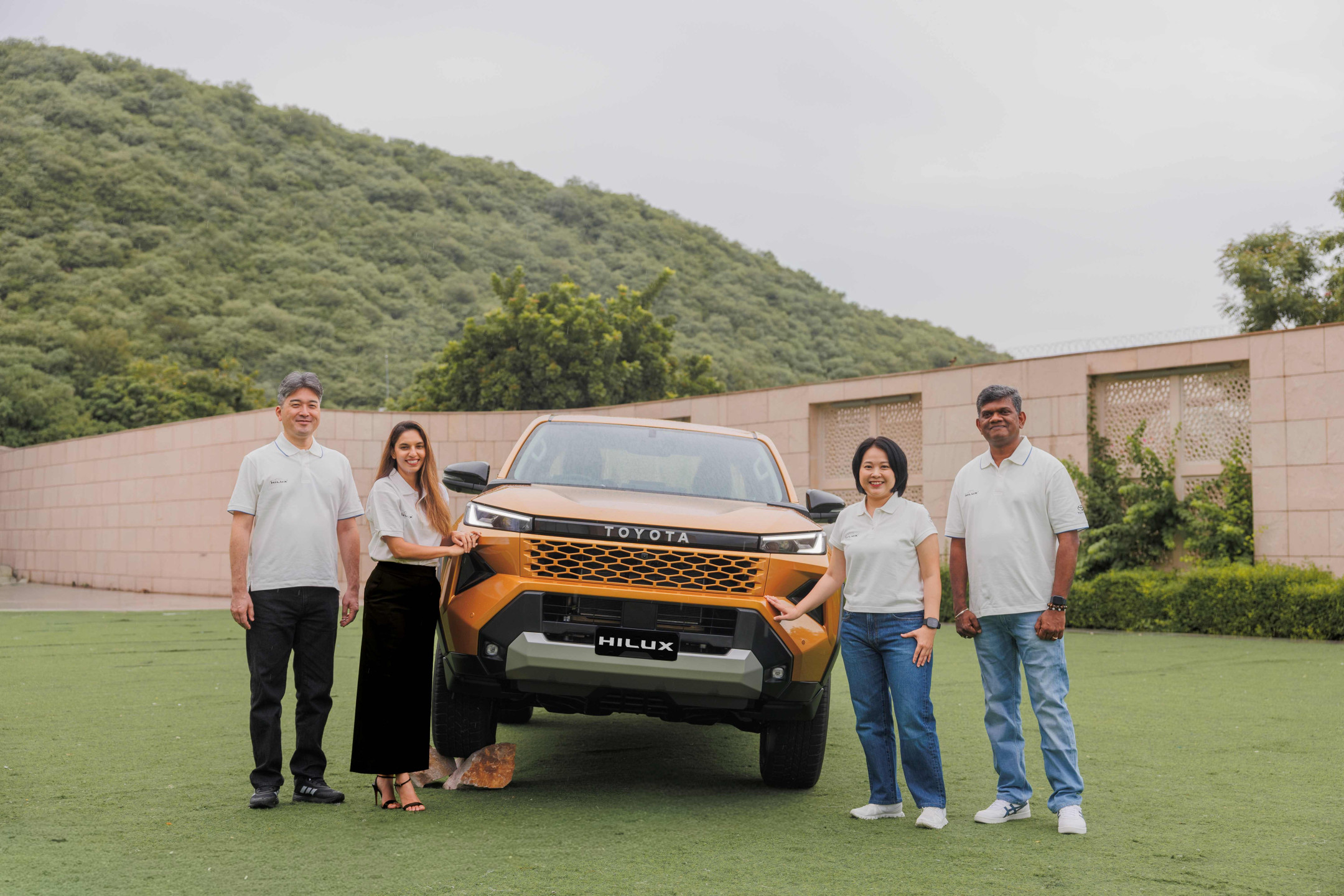
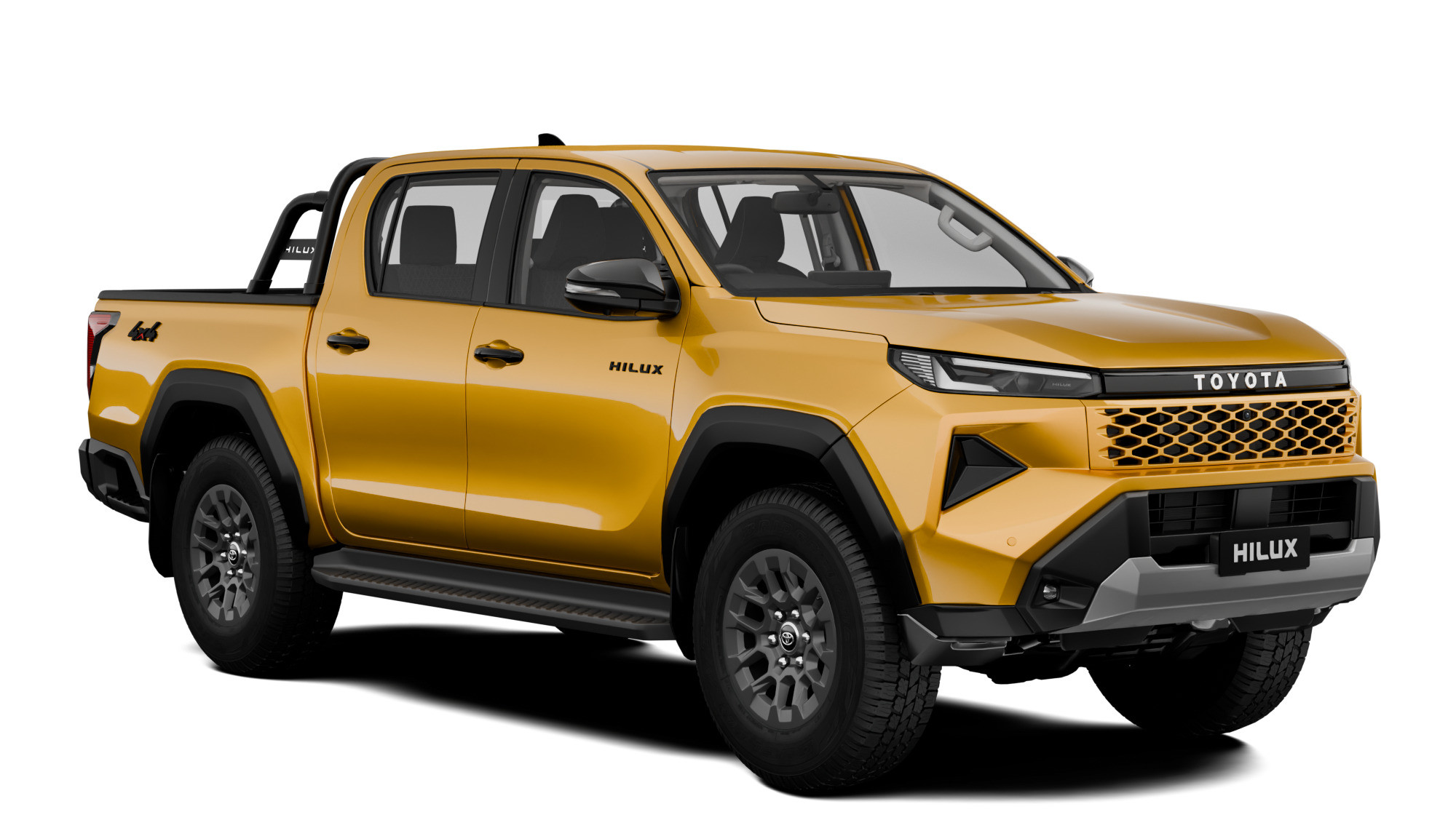
Built to go anywhere
Beneath the fresh styling, the Hilux remains reassuringly familiar.
It continues to be built on a rugged body-on-frame chassis and is powered by Toyota's proven 2.8L BS6 Phase 2 diesel engine producing 204 PS and 500 Nm of torque, paired with a six-speed automatic transmission. An 80-litre fuel tank further reinforces its long-distance credentials.
Off-road capability remains central to the Hilux experience. Toyota's full-time four-wheel-drive system offers High and Low range, supported by an Electronic Differential Lock, Downhill Assist Control, double wishbone front suspension and rear leaf springs. It is still, first and foremost, a pickup engineered to venture far beyond paved roads.
The mechanical package hasn't changed dramatically. Nor did it need to. The Hilux has always been respected for what it can do rather than how loudly it talks about it.
A bolder presence
The biggest transformation is visual. Toyota calls the design philosophy 'Cyber Sumo', inspired by the powerful stance of a sumo wrestler moments before combat. In practice, that translates into a wider grille, a sculpted bonnet, more muscular fenders and a noticeably more assertive road presence.
The result is a Hilux that looks considerably more premium than before. While previous generations leaned heavily towards their utilitarian roots, this one comfortably straddles the line between working truck and lifestyle vehicle.
Toyota is clearly positioning the Hilux as more than just a pickup. It wants buyers to see it as an adventure companion that also happens to have a cargo bed.
A cabin that has grown up
If the exterior is where you'll notice the biggest visual changes, the cabin is where you'll appreciate them the most.
Previous generations never quite disguised the Hilux's commercial vehicle origins. This one feels far more sophisticated.
A new 12.3" touchscreen — the largest ever fitted to a Hilux — takes centre stage, offering wireless Apple CarPlay and Android Auto, alongside Toyota's i-Connect connected car technology. A 7" digital combimeter, wireless phone charging, cruise control, three drive modes, an eight-speaker audio system and PM2.5 cabin air filtration bring the Hilux much closer to modern premium SUV territory.
Material quality has also taken a welcome step forward. Soft-touch surfaces, metallic accents and improved ergonomics make the cabin feel considerably more upmarket, while the 60:40 split rear seats provide SUV-like practicality rather than the compromise often associated with pickup trucks.
It's still unmistakably a Hilux. Only now, it feels like one that's equally comfortable tackling an eight-hour highway drive as it is hauling equipment into the wilderness.
Safety & Technology
The Hilux has evolved beyond being just a rugged pickup. It now offers the kind of equipment buyers increasingly expect in this price bracket, without compromising its utilitarian DNA.
Safety has received a meaningful upgrade, with seven SRS airbags now offered as standard, alongside Vehicle Stability Control, ABS with Brake Assist, ISOFIX child-seat mounts, Tyre Pressure Monitoring System (TPMS), front and rear parking sensors, a panoramic view monitor, and Toyota's GOA impact-absorbing body structure. It's a comprehensive package that reflects the Hilux's evolution into a more complete lifestyle vehicle rather than a purely functional workhorse.
Pricing
The new Hilux is priced between INR 31.99 lacs and INR 36.69 lacs (ex-showroom) and that's a confident ask.
It also places the Hilux in an interesting position. Buyers shopping in this price range will inevitably compare it with Toyota's own Fortuner, while alternatives such as the MG Gloster and Skoda Kodiaq also enter the conversation.
But perhaps those comparisons miss the point.
Toyota isn't trying to position the Hilux as the most practical seven-seat SUV or the most feature-loaded premium vehicle. Instead, it is targeting a buyer who wants something different. Someone who values capability and individuality over convention. Rather than competing on value alone, it pushes an outdoor-first lifestyle.
Who is it really for?
The Hilux isn't designed for families looking for three rows of seats or chauffeur-driven comfort. Instead, it appeals to buyers who spend weekends beyond the city limits. Those who enjoy overlanding, camping, off-road adventures, cycling, motorcycles, water sports or simply travelling to places where the road eventually disappears.
Around the world, the Hilux has earned its reputation in far more demanding environments. It has long been trusted by emergency responders, humanitarian organisations and relief agencies operating in remote, disaster-stricken regions where reliability is often a lifeline rather than a convenience. That same toughness translates effortlessly into everyday adventure.
The cargo bed isn't a styling exercise; it's genuinely useful. Whether transporting expedition gear, motorcycles, bicycles or camping equipment, the Hilux offers a level of practicality that no conventional SUV can quite match.
In India, buyers looking for a premium lifestyle pickup still represent a relatively small niche. But it is a niche that appears to be steadily growing, and Toyota seems convinced that the timing is finally right.
Final Thoughts
The Hilux has never lacked credibility. It has spent more than five decades earning a reputation that few vehicles can match. What it lacked in India was broader lifestyle appeal.
The ninth-generation addresses that without losing sight of what made the Hilux iconic in the first place. It retains its rugged engineering and legendary reliability while introducing a far more contemporary design, a genuinely premium cabin and the everyday refinement today's buyers expect.
Whether it becomes a commercial success in India remains to be seen. But one thing is clear: Toyota has done its part. The new Hilux feels more desirable, more sophisticated and more relevant than ever before. For buyers seeking an authentic adventure vehicle rather than another premium SUV, this global icon has never made a stronger case for itself.
Leave a Comment
0 Comments
No comments yet — be the first!