Kia Carens Clavis EV Review: The family MPV reimagining for an electric future
Electric mobility has evolved from being a novelty experience to a more accessible option, and Kia’s new Carens Clavis EV is a clear reflection of that shift.

Electric mobility has evolved from being a novelty experience to a more accessible option, and Kia’s new Carens Clavis EV is a clear reflection of that shift. When a mainstream, value-oriented nameplate like the Carens decides to go electric, it’s bound to be an intriguing proposition.






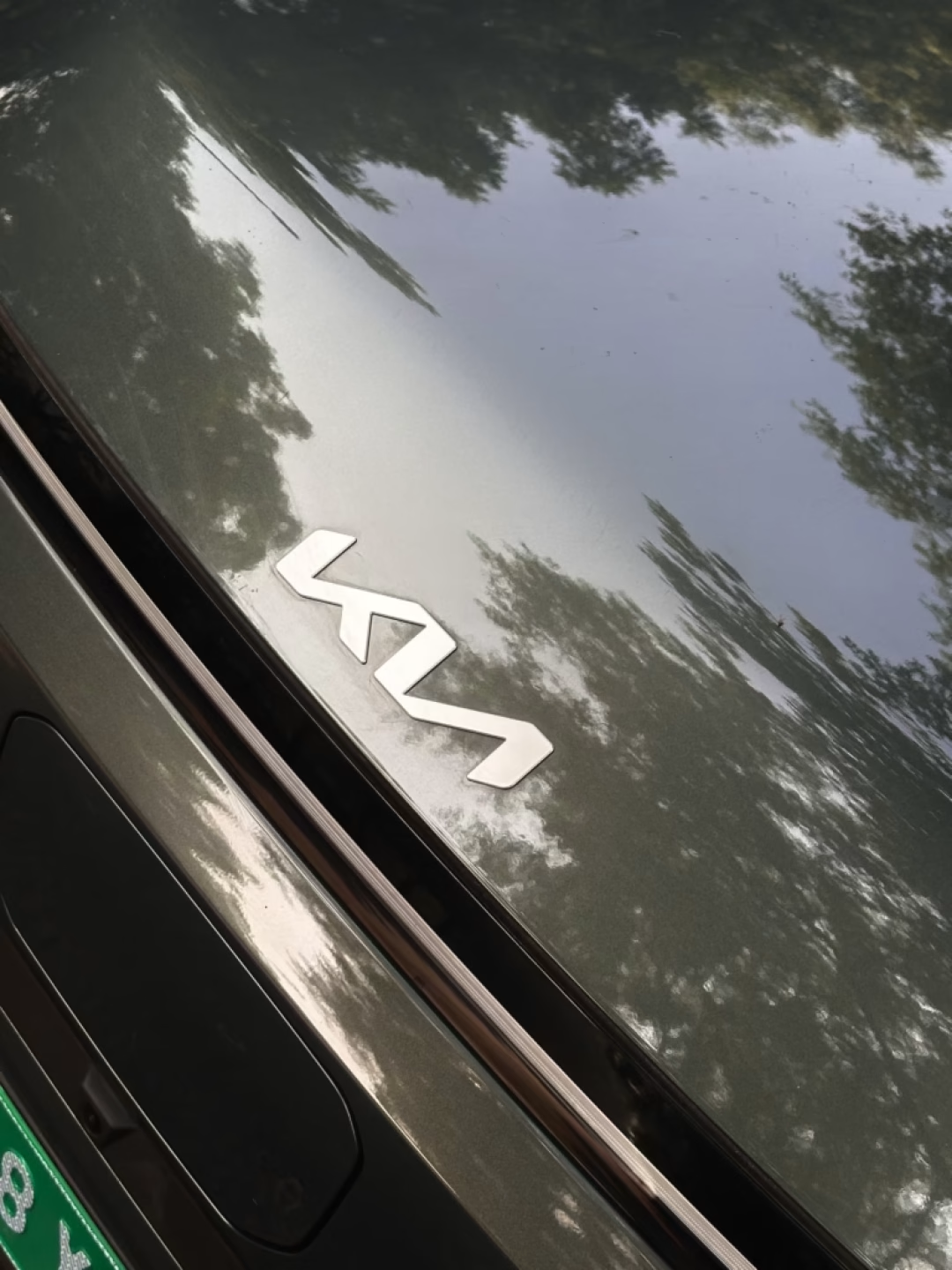
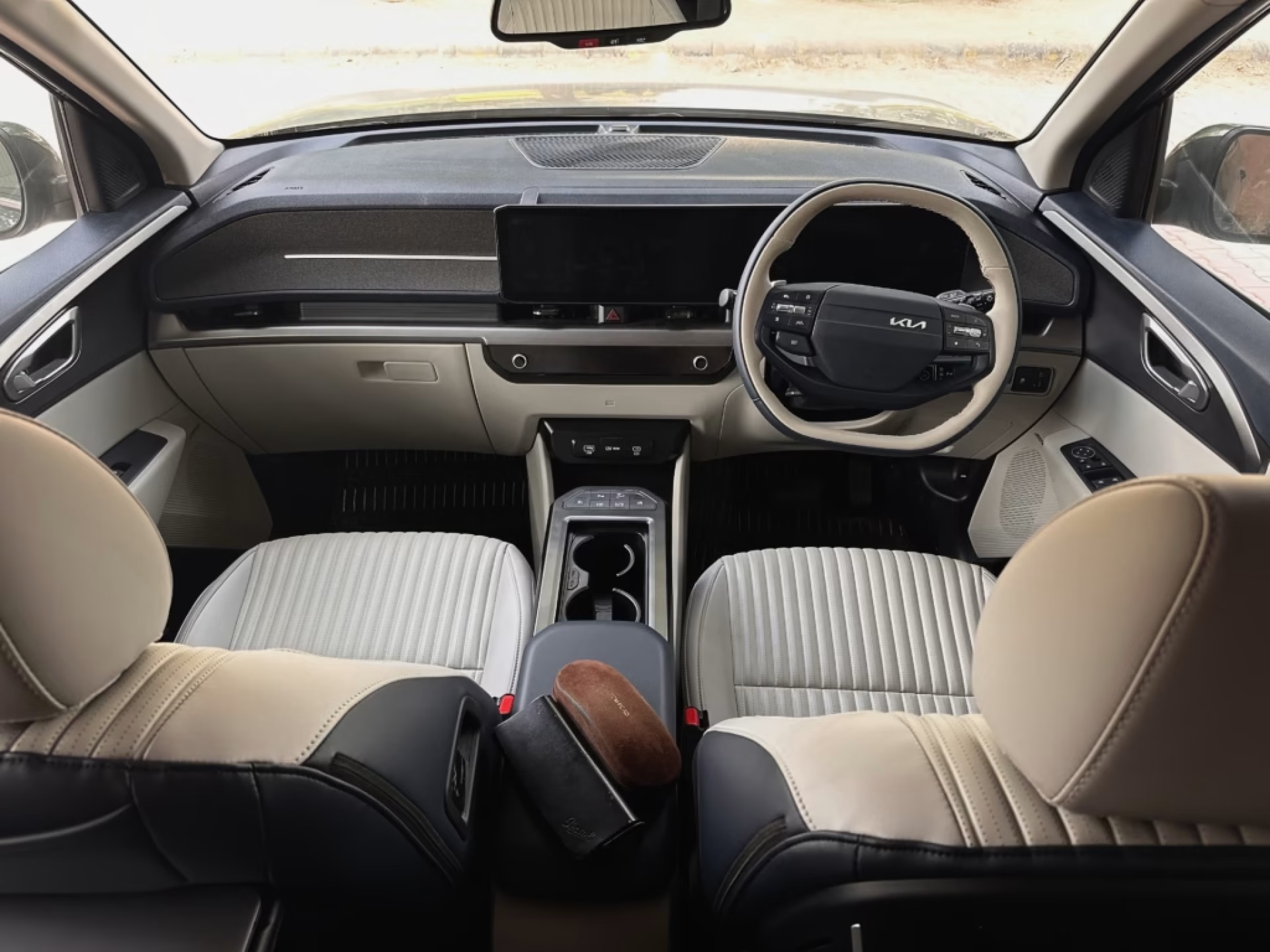
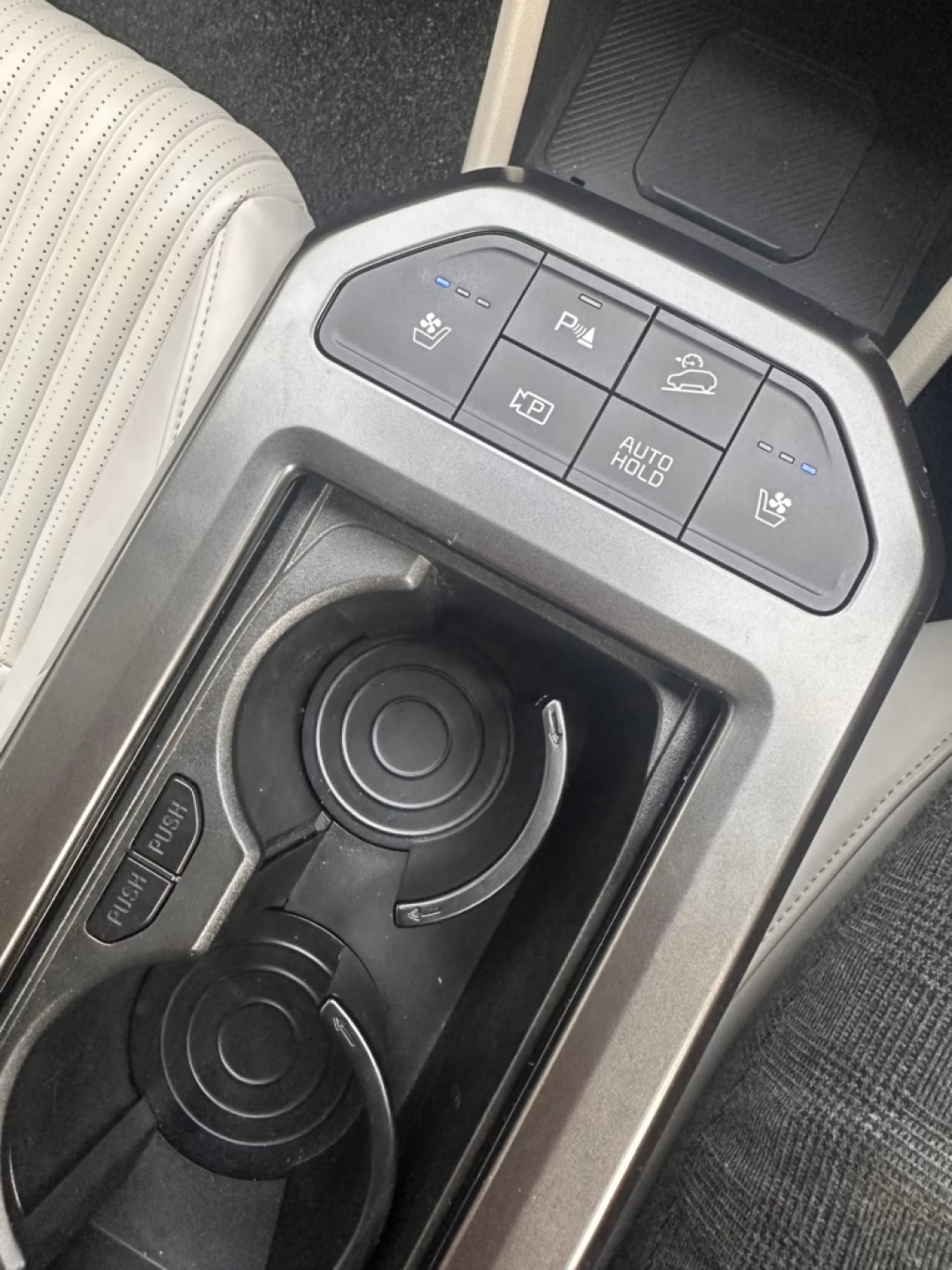
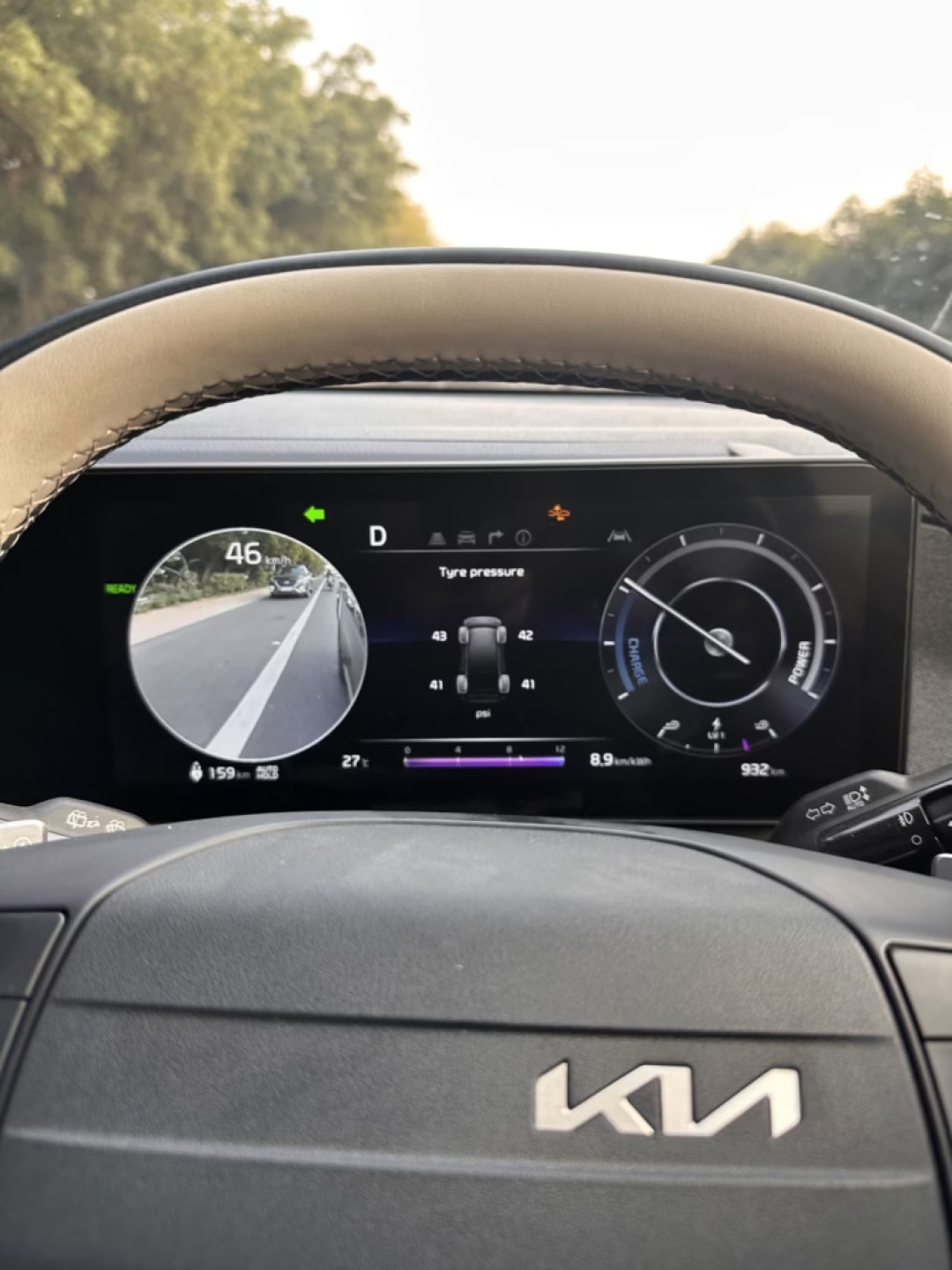

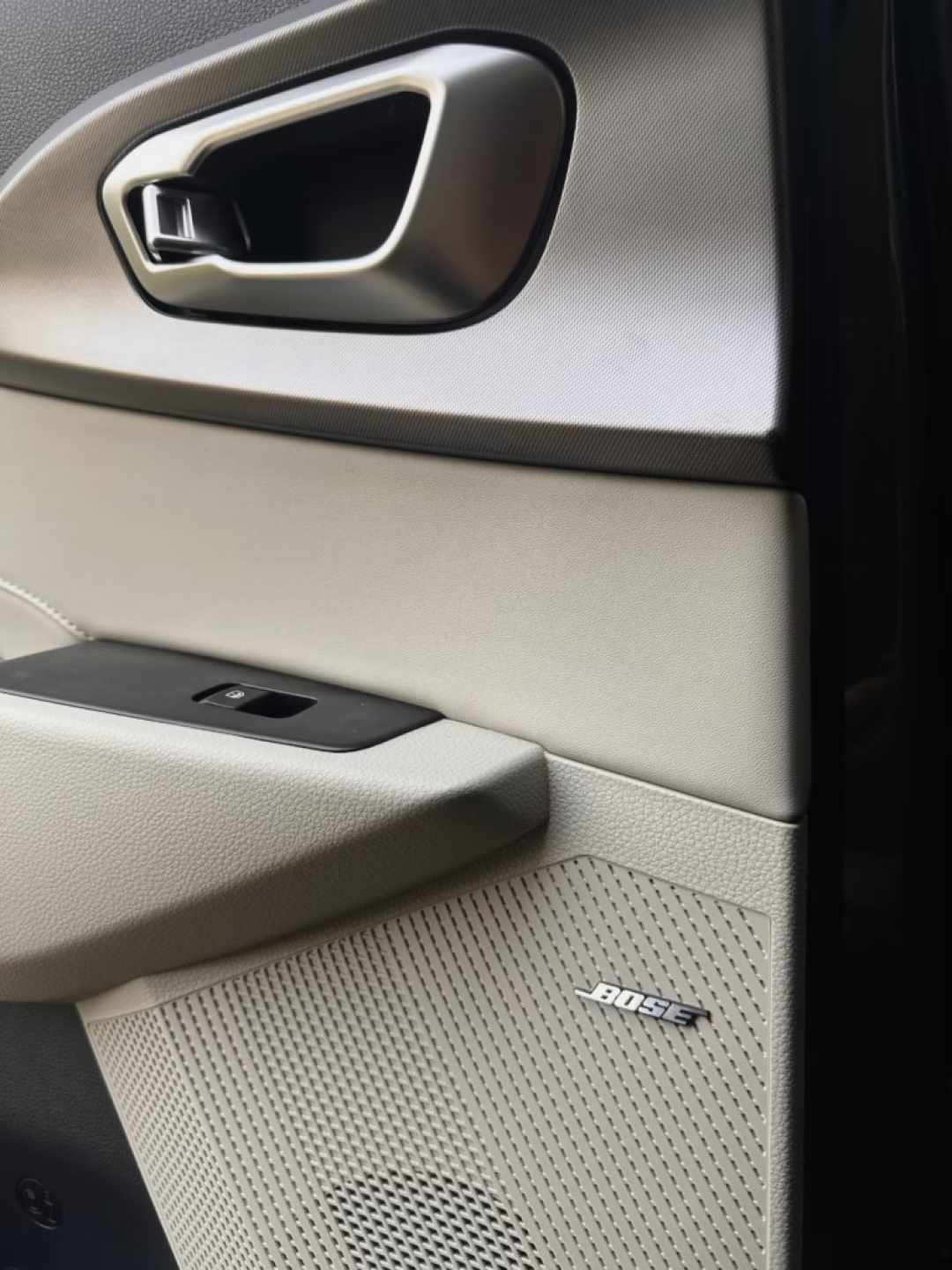
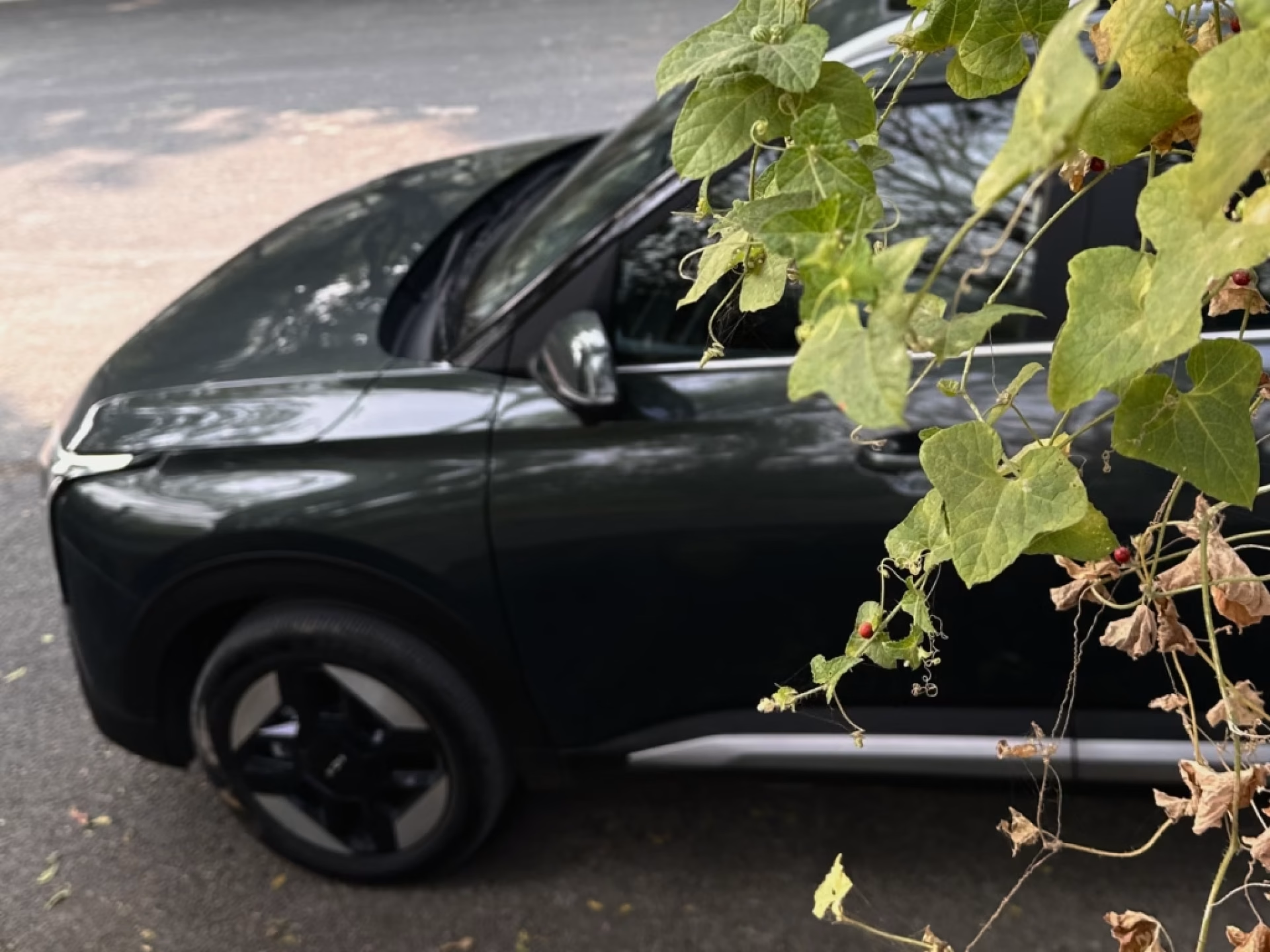

The Carens has always been about family-friendly practicality, but in its new electric form, it attempts to marry that usability with modern efficiency and quiet confidence. The variant we drove, the top-of-the-line HTX+ ER, aims to deliver a complete EV experience while retaining the core identity that made the Carens popular in the first place. And what’s interesting is how seamlessly Kia seems to have done that, without making the car feel like a radical departure from its roots.
Design & Exterior
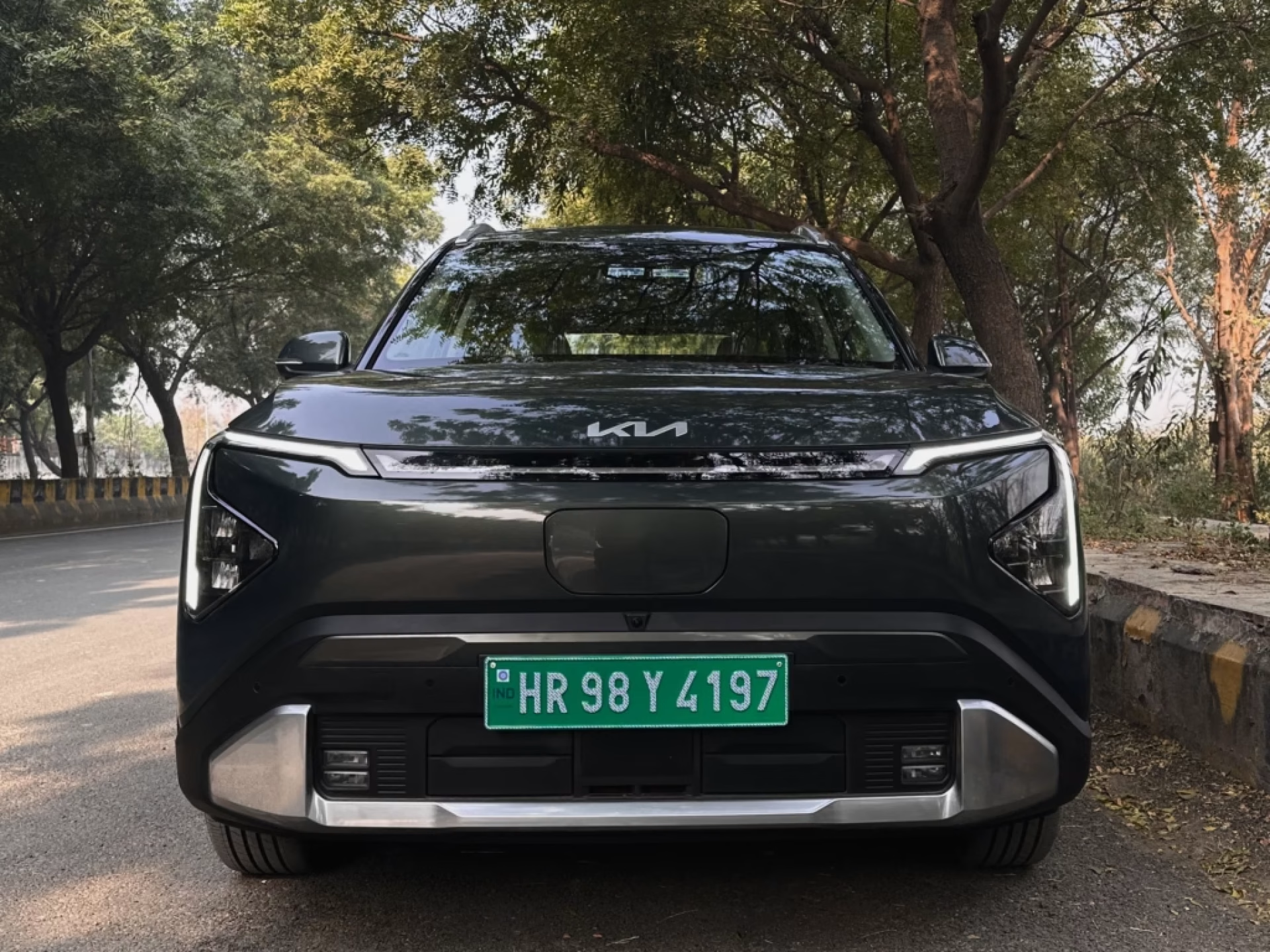
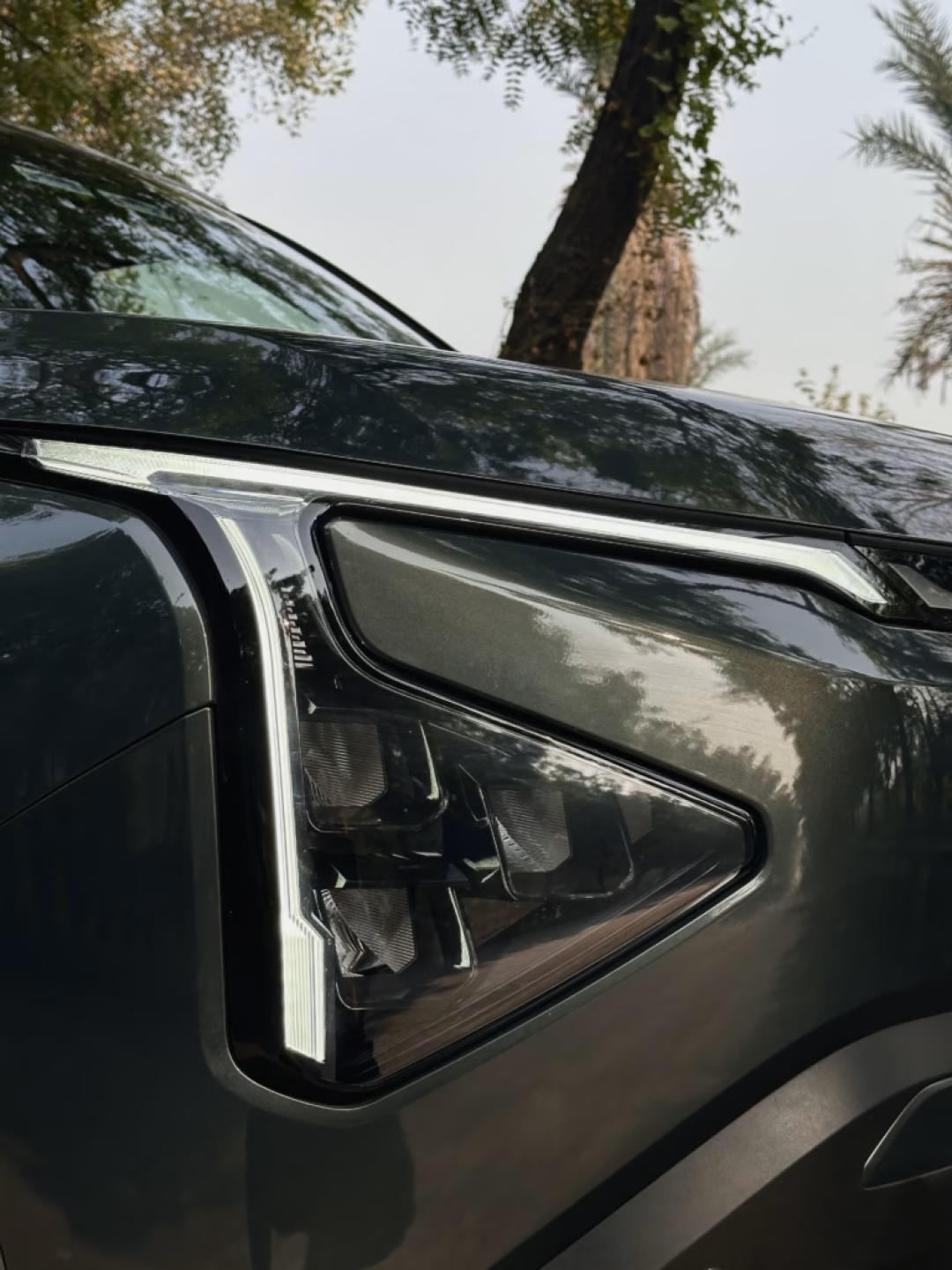
The Carens Clavis EV doesn’t scream for attention — and that’s perhaps one of its biggest strengths. It looks reassuringly familiar, but with enough futuristic detailing to differentiate it from its ICE sibling. The silhouette is identical to the standard Carens, but subtle refinements in the front fascia and surfacing give the EV its own visual identity. The closed-off grille, slightly revised bumper with active aero elements, and the horizontal light bar above the “grille” lend it a cleaner, more aerodynamic look, while the EV-specific features like the charging port flap in the front grille give it a touch of distinction.
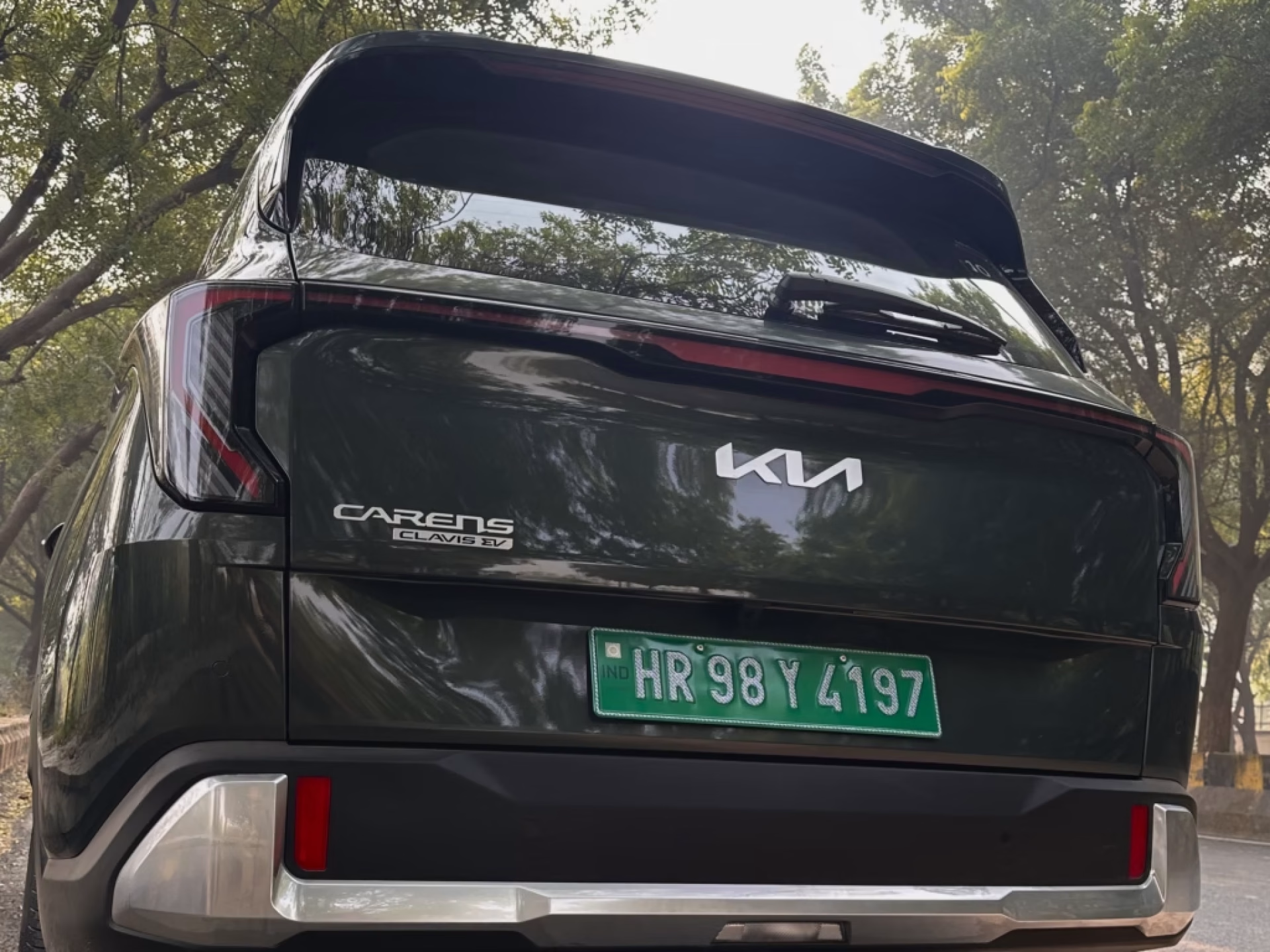
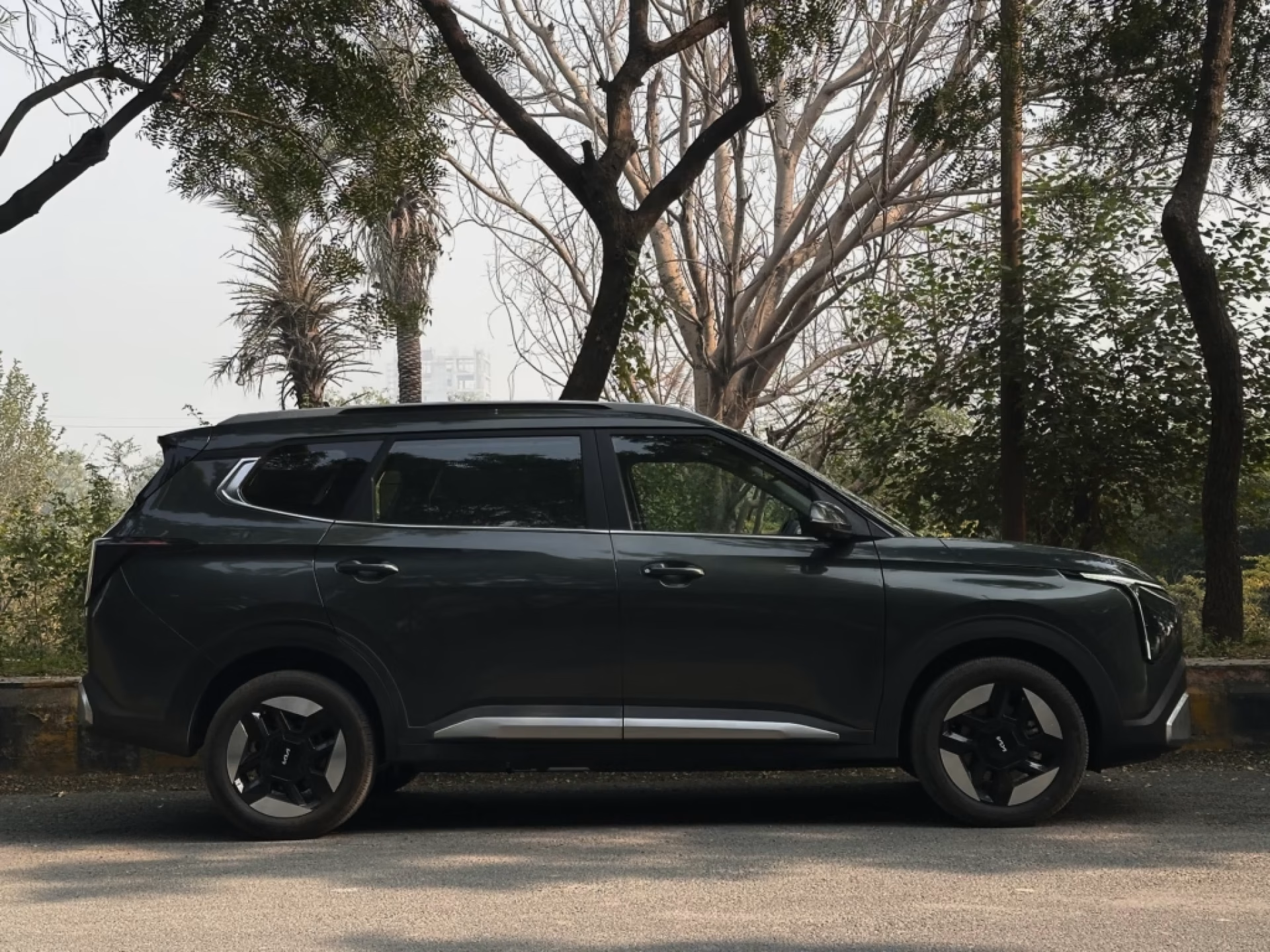
The proportions of the Carens Clavis remain near-perfect for a vehicle in this category. The overall design is defined by crisp lines, taut surfaces, and Kia’s now-recognisable squared off stance that gives it a planted, confident look on the road. The front fascia is dominated by Kia’s signature ‘Digital Tiger Face’ and contoured LED headlamps that blend into the upper grille line seamlessly. The side profile is clean, with a long wheelbase, short overhangs, and subtle chrome detailing around the windows. The Clavis EV has a planted stance, and the sharp character line running along the shoulder adds tension to the otherwise fluid bodywork. The aero-optimised alloy wheels give away its electric credentials without shouting about them, and the wraparound tail lamps connected by a full-width LED bar that emphasise the car’s width. Overall, the Carens Clavis EV is a handsome, well-executed design — futuristic without being flashy, and distinctly Kia in its visual confidence.
Cabin Mood
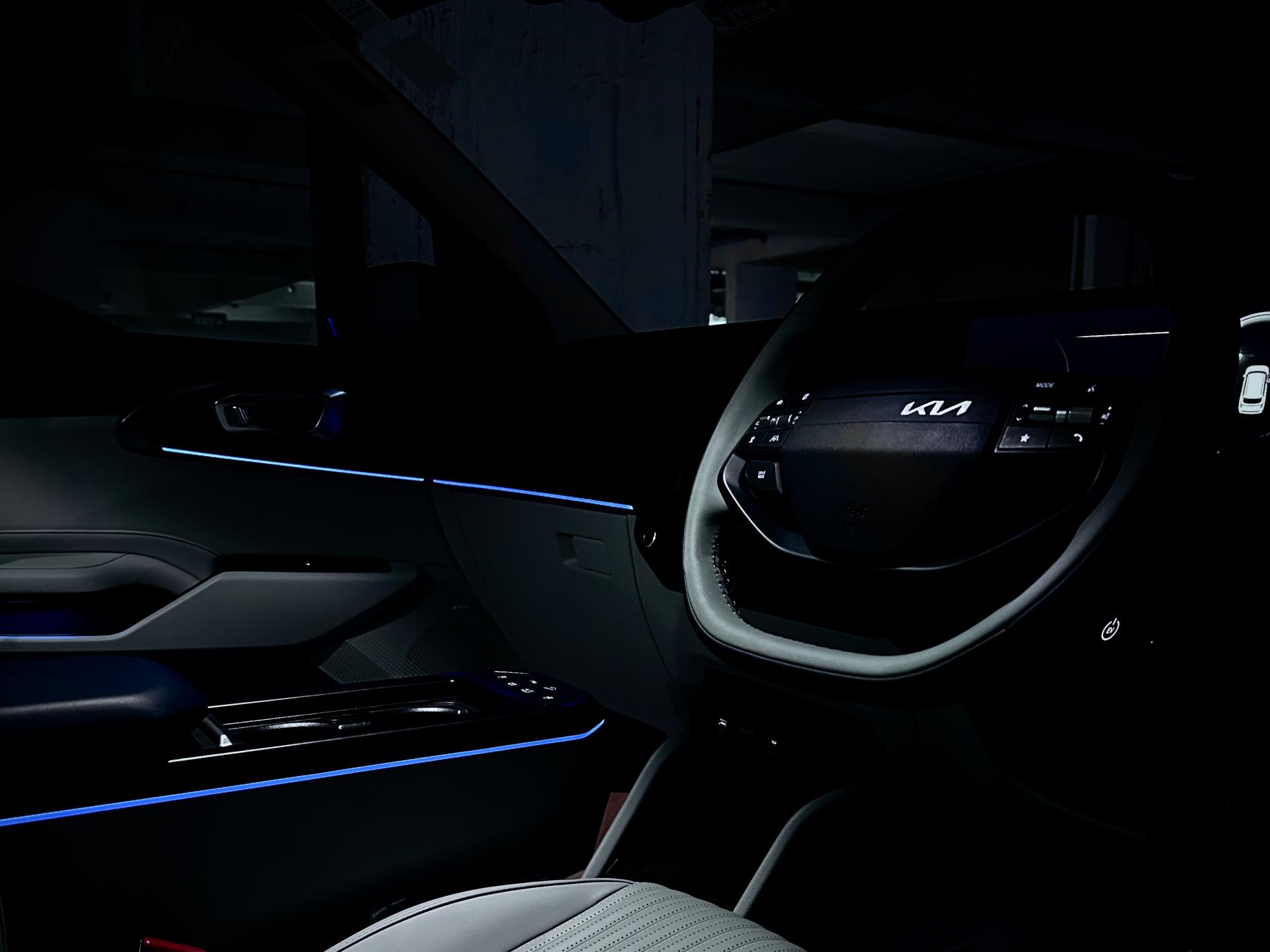
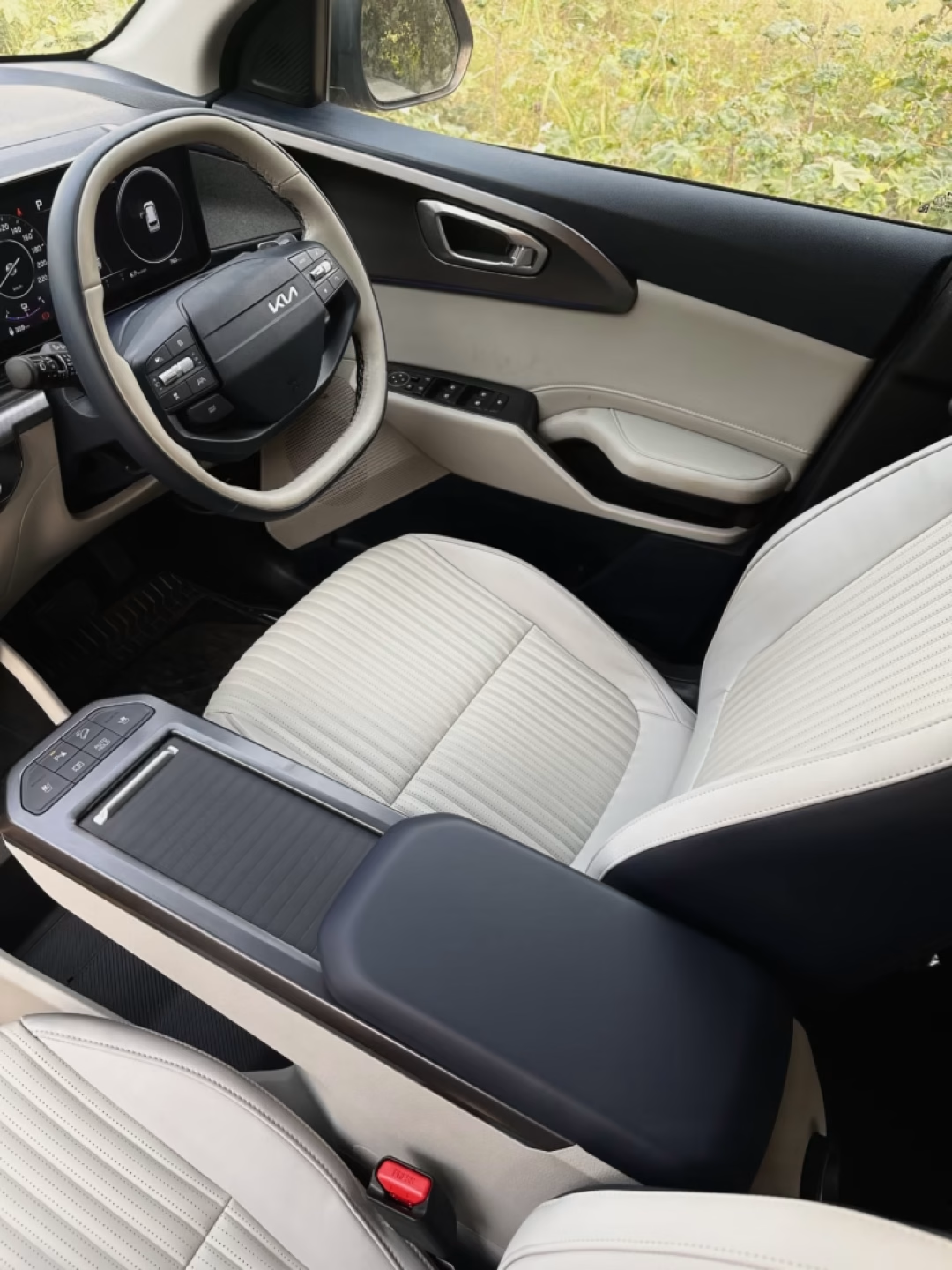
Step inside the Clavis EV HTX+ ER, and you’re greeted with an interior that feels thoughtfully executed and surprisingly premium. Kia has struck a good balance between modern digital interfaces and physical usability, and the result is an interior that feels both welcoming and futuristic.
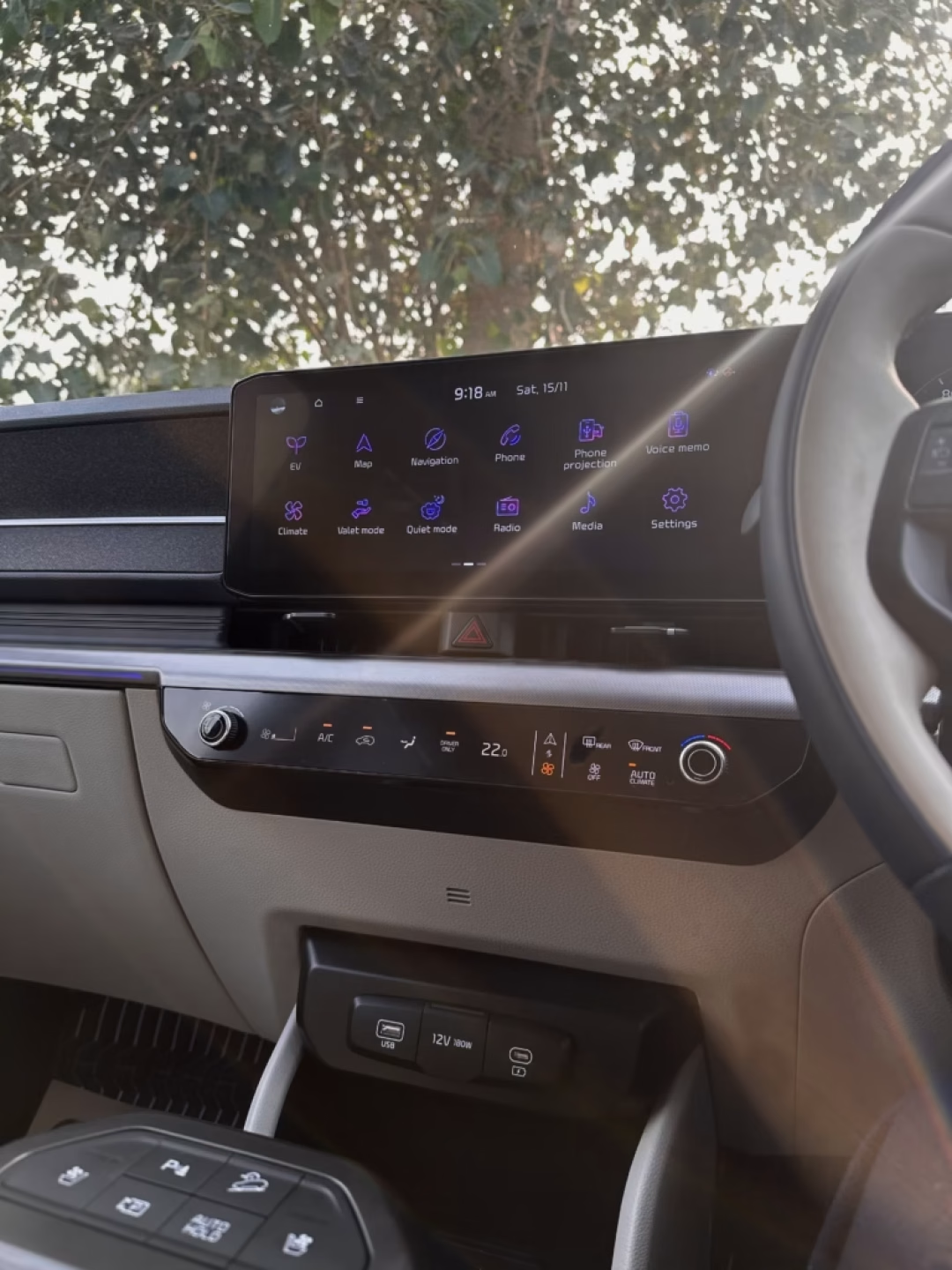
The dashboard layout is minimalist yet functional, with a wide horizontal design that accentuates cabin width. The large touchscreen dominates the centre stack, flanked by slim AC vents on the bottom and seamlessly integrated into the digital driver’s display in a look that’s highly reminiscent of many modern car interiors. The overall design aesthetic feels clean and uncluttered thanks to the limited physical switchgear on offer. Thankfully, Kia has retained a row of Haptic Touch-sensitive buttons which can be toggled between AC and general controls, providing a much needed tactile option for simple tasks like increasing the fan speed.
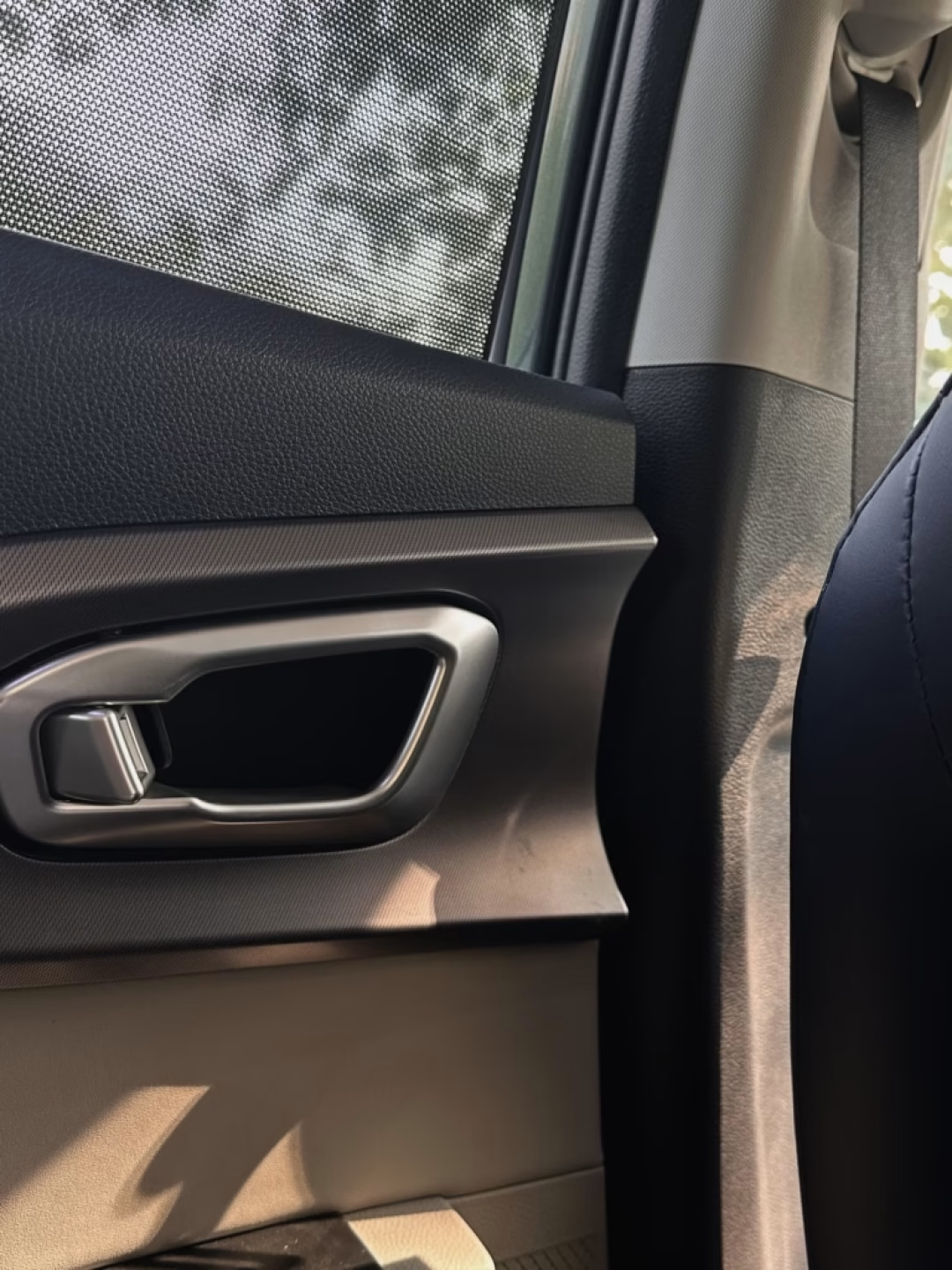
Quality is another area where the Carens Clavis EV impressed us. The materials used across the cabin feel solid and upmarket. There’s extensive use of soft-touch surfaces across the dashboard, door pads, and armrests, something not often seen in vehicles in this price segment.
Space & Versatility
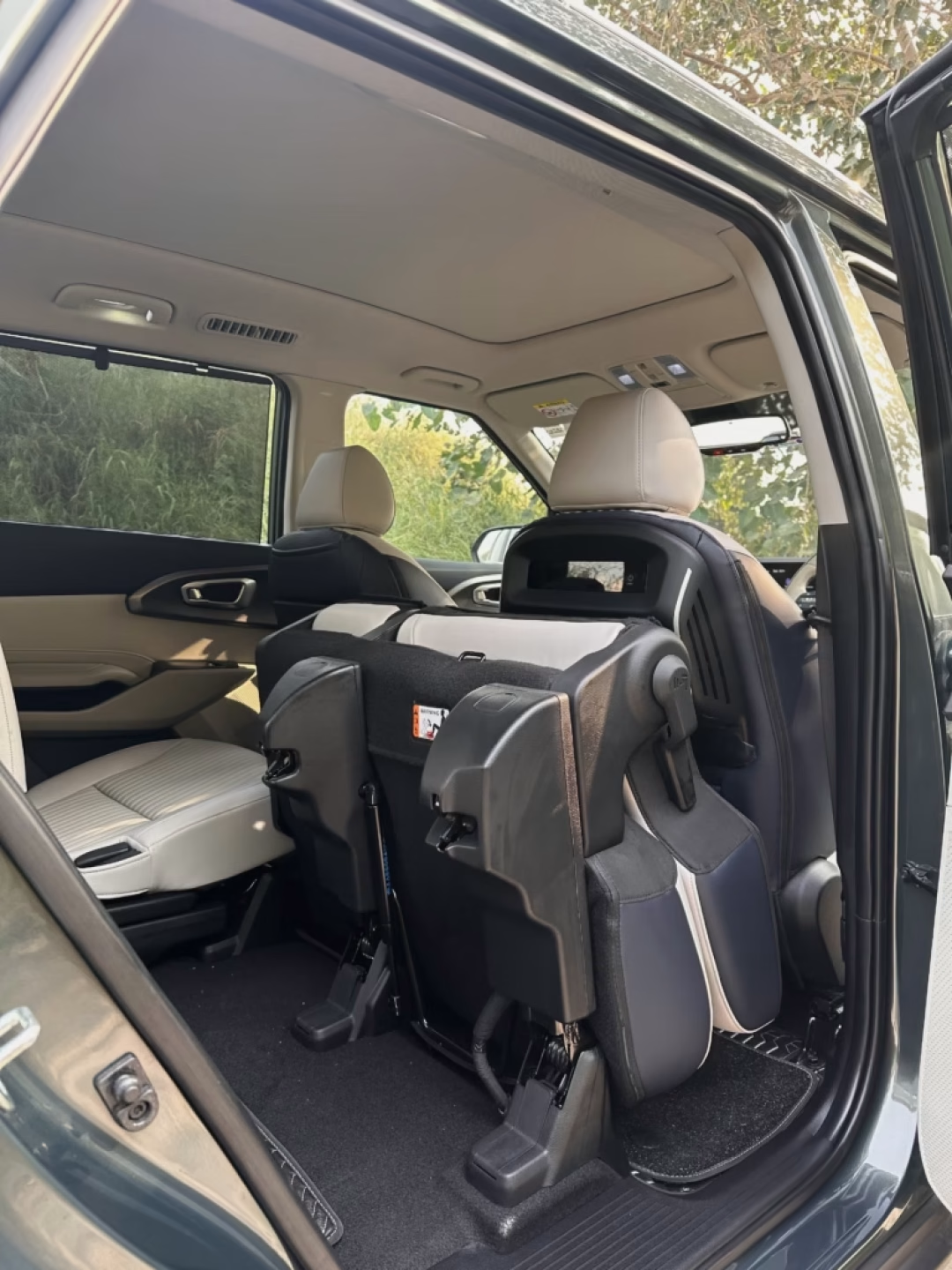
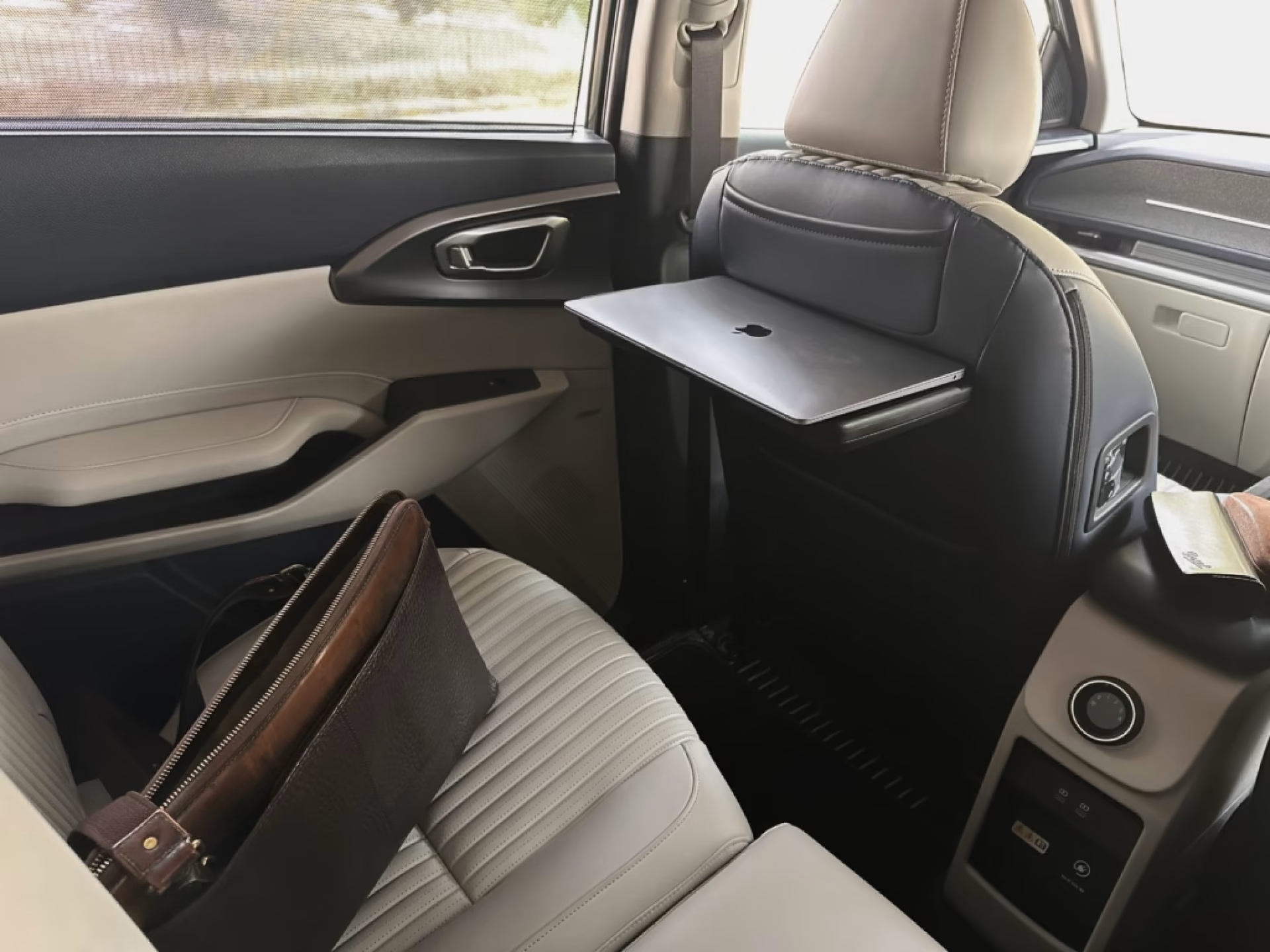
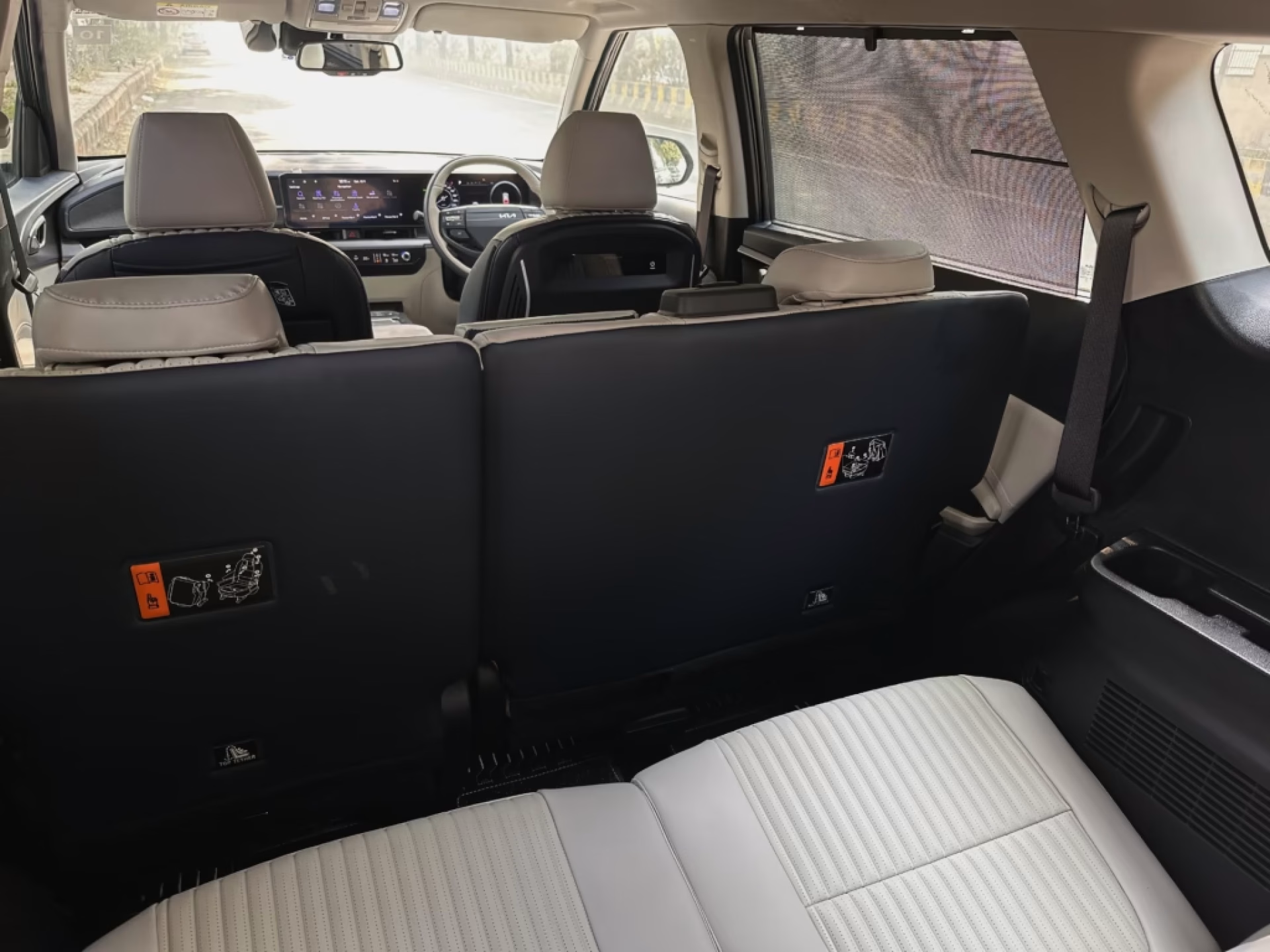
Kia has smartly used the EV platform to enhance cabin practicality. The flat floor creates more room for passengers, while the floating centre console, made possible by the absence of a transmission tunnel, opens up additional storage below. The cabin feels open and well organised, with thoughtfully placed storage for everyday essentials, including adjustable-depth cup holders, deep door pockets, a two-tier centre console and conveniently located USB ports. Rear AC vents are standard, and the second row gets a seatback tray table that is genuinely useful for snacking or working on the move.
Space is generous across all three rows, with ample headroom and legroom, and the panoramic sunroof further enhances the airy feel. The seats are wide, supportive and comfortable over long drives, though the quilted upholstery feels less premium than expected, appearing more aftermarket than bespoke with exposed side zippers. The light ivory upholstery does look elegant, but is likely to be a dirt magnet over time in Indian conditions. The second row slides and reclines to balance passenger and luggage space, while the third row remains best suited for shorter trips. Overall, this remains one of the most versatile and family-friendly cabin layouts in the segment.
Tech & Features
The top-spec HTX+ER variant brings with it an impressive array of features, and Kia has loaded this car with all the creature comforts and safety technology expected of a modern family EV. Standout features include the Bose sound system, which delivers excellent audio clarity and depth, the ambient lighting system which offers multiple colour themes that can be customised to mood, and the large panoramic sunroof, which remains one of the cabin’s highlights. Other features include (wired) Apple CarPlay and Android Auto, and fully digital driver’s display, ventilated front seats, automatic climate control, wireless charging, and a built-in air purifier placed behind the driver’s seat. However, the Carens Clavis EV’s interior experience isn’t without flaws; the fact that you have to connect your phone via the old-fashioned USB-A port to access CarPlay is a contradiction to say the least, and we would’ve much preferred the air purifier to be a part of the HVAC system rather than a bolt-on feature, which disrupts the second row leg space.
Safety
Where the Clavis EV excels is in safety and driver assistance technology. The ADAS suite offered in the top variant is comprehensive, including features such as lane keep assist, forward collision warning, blind-spot monitoring, rear cross-traffic alert, adaptive cruise control, and driver attention warnings. These systems work smoothly, offering an extra layer of reassurance without being intrusive. Combined with 6 airbags and all-round parking sensors with a 360-degree camera, the Clavis EV feels well-prepared for daily driving.
Drive & Performance
The Carens Clavis EV is firmly positioned as a family-friendly offering, and that’s evident as soon as you set off. The drive is relaxed and fuss free; the electric motor’s instant torque makes low-speed acceleration a breeze, and the build up of power is smooth and linear. The Extended Range variants of the Clavis EV get a 51.4kWh battery pack in place of the smaller 42KWH in standard variants. This bigger battery pack is good for 169 bhp and 255 Nm of torque. The performance isn’t mind blowing by any means, but the Carens Clavis EV is able to deliver in most scenarios. Sudden overtakes are dealt with with relative ease, and the light steering makes the car feel quite easy to manoeuvre. Visibility all around is excellent as well, but our biggest issue lies with the brakes on the Carens Clavis EV. We found the break pedal to be awkwardly positioned, and the overall feel of the break isn’t the most natural.
At higher speeds, the Clavis EV feels composed and confident up to moderate speeds. Push it harder though, and you start to get the sense that this is a car designed for calm, not aggression. The suspension setup favours comfort, soaking up bumps and imperfections effectively. High-speed stability is decent, though the tall body means there’s a lot of movement over undulating surfaces.
Electric Advantage
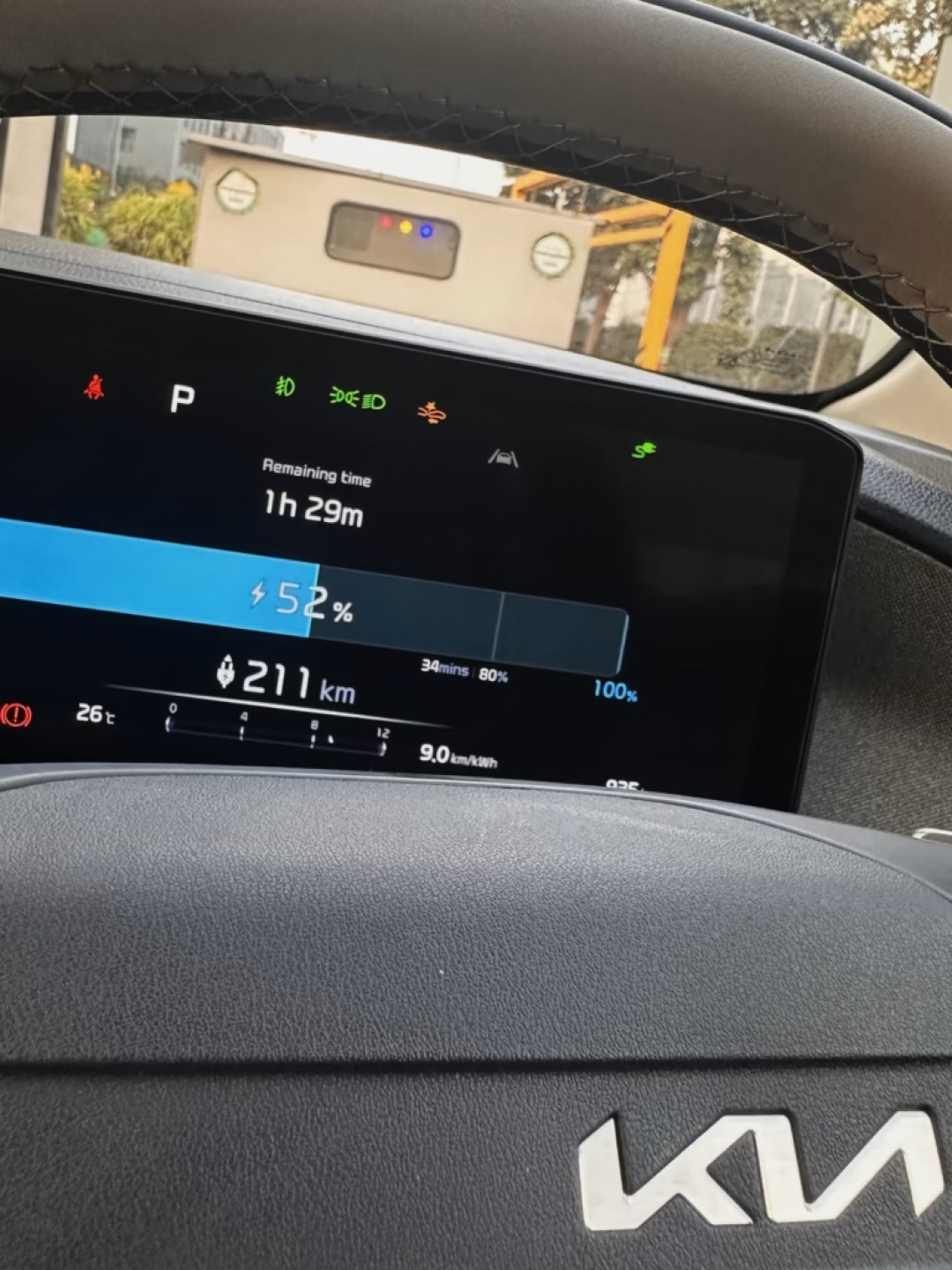
Real-world range from the Carens Clavis EV comfortably exceeded expectations. While the Extended Range version is rated at up to 490 km on a single charge, our test car delivered a stress-free 400+ km in real-world conditions. That makes daily commuting and typical family use easy to manage without range anxiety. Charging is equally reassuring, with a 10–80 per cent top-up taking just 39 minutes using a 100 kW fast charger.
Prices for the KIA Carens Clavis EV start at INR 17.99 lakh and go up to INR 24.49 lakh (ex-showroom).
0 Comments
No comments yet — be the first!