Uber's slow decline: Comfortably numb to slipping standards
Uber once redefined urban mobility. Today, declining service standards, growing passenger safety concerns and poor customer support are eroding the trust that once made it the go-to ride-hailing platform.

There was a time when Uber transformed urban mobility. When it arrived in India, it quickly became the default mode for many of us to get around. "Let's Uber it" became part of everyday conversation. Booking a cab was suddenly simple, fares were transparent, and travel became predictable. With a few taps, a ride would arrive at your doorstep. Office commutes became easier. Airport transfers were hassle-free. Families could book rides for elderly parents without worrying about how they would find transport. Parents could arrange rides for children and young adults with greater peace of mind. Women travelling alone had another option that promised convenience, reliability and, above all, safety.
Many of us were early adopters. We recommended Uber because it simply worked. Today, that confidence is wearing thin.
Over the past few years, the experience has become noticeably inconsistent. Poorly maintained vehicles are no longer uncommon. Questions are increasingly being raised about driver verification and onboarding standards. Ride cancellations have become routine, and customer support often feels designed to close tickets rather than resolve problems. Conversations with drivers frequently reveal frustration with the platform and its policies. These issues are far more common today than they were just a few years ago.
Passengers have noticed the shift too. Shoffr consistently delivers a better experience, albeit at a higher price point. More recently, Green SM has launched with cleaner vehicles, courteous drivers and dependable service. In the mass-market segment, Rapido increasingly appears to be occupying the space that Uber once did. Interestingly, drivers operating across multiple platforms prefer accepting Rapido bookings over Uber. Considering that these are the same drivers using multiple ride-hailing apps, that preference is telling.
From a perception standpoint, today Uber is what Ola used to be. And Rapido is the new Uber. Not because competitors transformed the market overnight, but because they focussed on improving the customer/ value experience while Uber appeared content with the status quo.
That raises an obvious question: How did Uber slide so low, and why doesn't it appear to be doing much about it?

One incident exposed a larger problem
Most of us never think about vehicle maintenance when booking a cab. Nor should we have to. Passengers assume the vehicle arriving at their doorstep is roadworthy. They assume reasonable safety checks have been carried out. They assume that if something goes wrong during the journey, the platform behind the app will respond promptly, take ownership of the situation and provide basic support. That trust is the foundation of ride-hailing. Without it, convenience, affordability and technology mean very little.
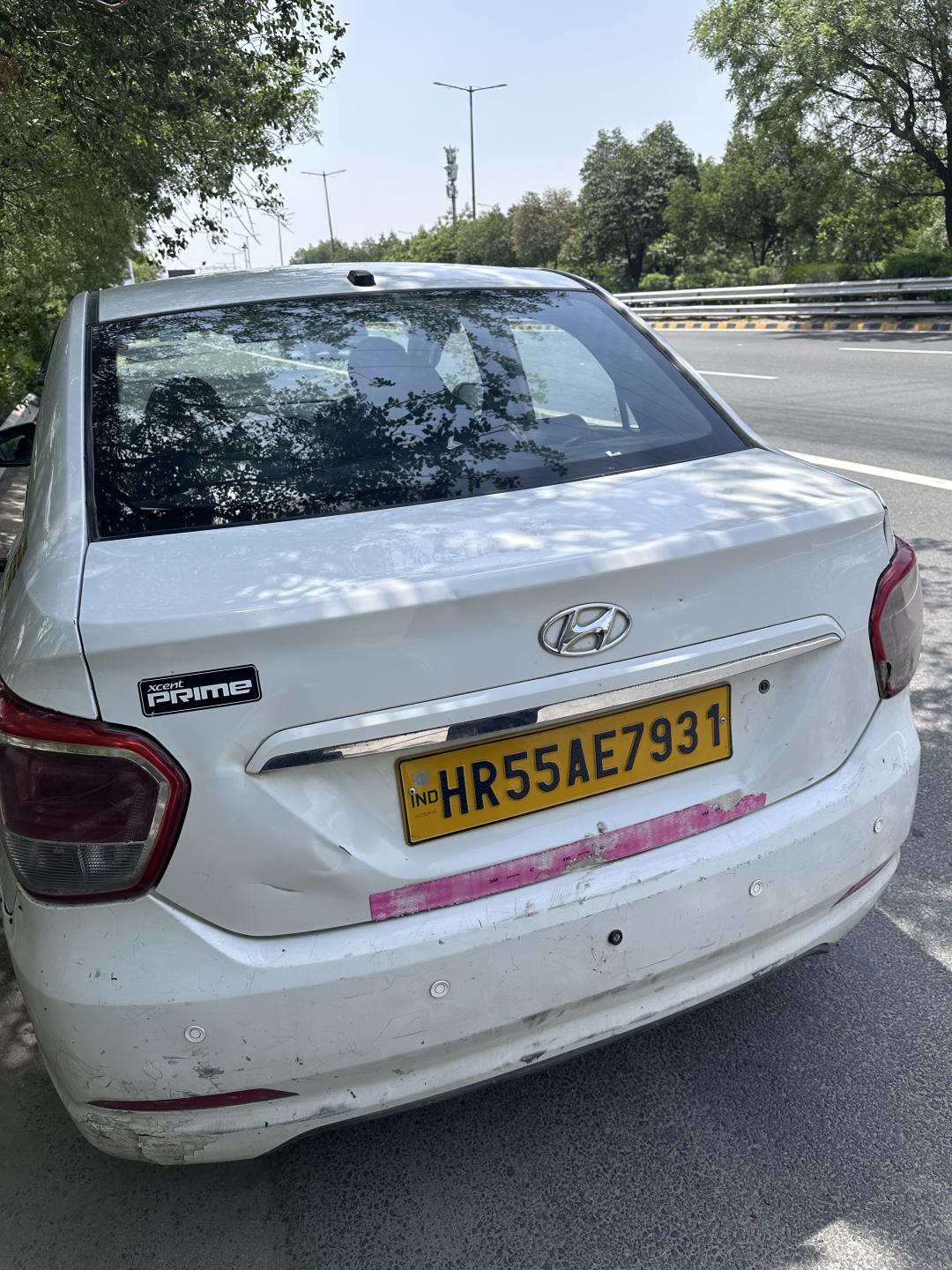
Our journey on 08 June 2026 began like any other. We booked a Go Sedan, the driver arrived, we got into the vehicle (HR55 AE 7931) and the trip started normally. A short while later, while travelling on a high-speed expressway, the driver slowed down, pulled over to the side and calmly informed us that the vehicle's brakes had failed. It was no longer safe to continue. He asked us to cancel the trip and book another cab.
At expressway speeds of around 100 km/h, a brake failure could easily have resulted in a far more serious outcome. Fortunately, it didn't. But that does not diminish the seriousness of what had just happened. A brake failure on a high-speed expressway is not merely a vehicle breakdown. It is a critical safety failure that puts passengers, the driver and everyone else on the road at risk.
Once the vehicle came to a halt, we contacted Uber support and expected their safety protocol to take over. Instead, we were left to arrange the rest of our journey ourselves.
When the ride ends, does Uber's responsibility end too?
Mechanical failures do happen. But ensuring that vehicles meet safety standards through audits and risk mitigation is ultimately the platform's responsibility. More importantly, the true measure of a mobility platform is how it responds when something goes wrong.
In our case, there was no proactive outreach from Uber. No assistance in arranging another ride. No follow-up to check whether we had reached our destination safely. No indication that the incident was being treated as anything more than another customer support case.
For a company that frequently speaks about safety, the response lacked the urgency the situation demanded.
A refund is not a safety response
We contacted Uber again after the incident through its official support channels. Our objective was straightforward. We wanted to know whether the incident had been investigated, and what steps had been taken to prevent something similar from happening again.
What followed was several days of back-and-forth messages through Uber's in-app customer support. Templated responses, evasive and generic replies, and a great urgency to close the ticket than to meaningfully address the incident quickly emerged as recurring patterns.
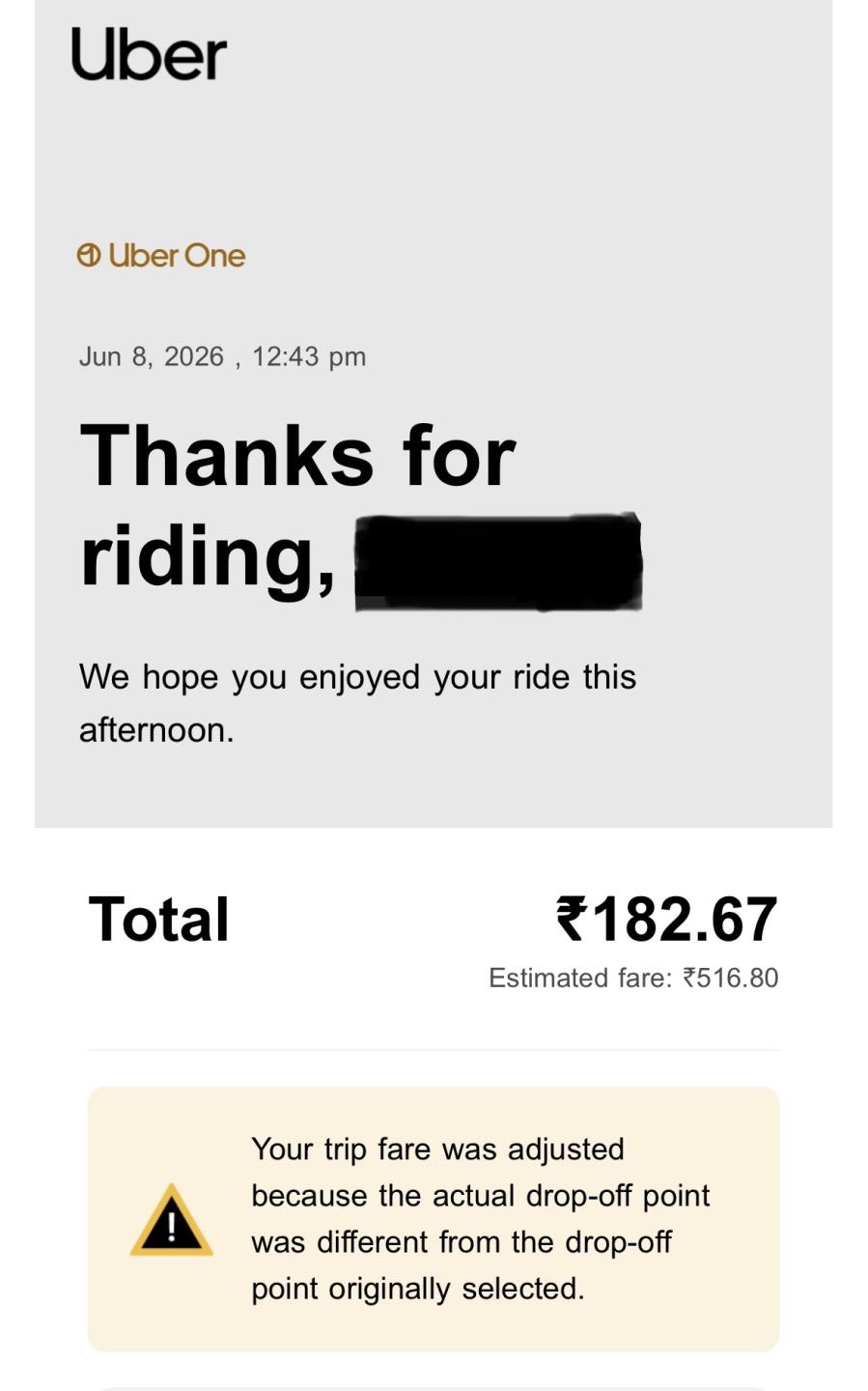
Five days after the incident, Uber refunded INR 182.67 out of the total fare of INR 516.80, representing the portion charged for a journey that was never completed. That amount should not have been charged in the first place. Presenting its refund as a resolution was terribly misplaced.
There was no meaningful explanation of how the incident had been investigated, what action had been taken, or how similar occurrences would be prevented in the future. The only phone call we received came ten days after the incident, long after any sense of urgency had passed.
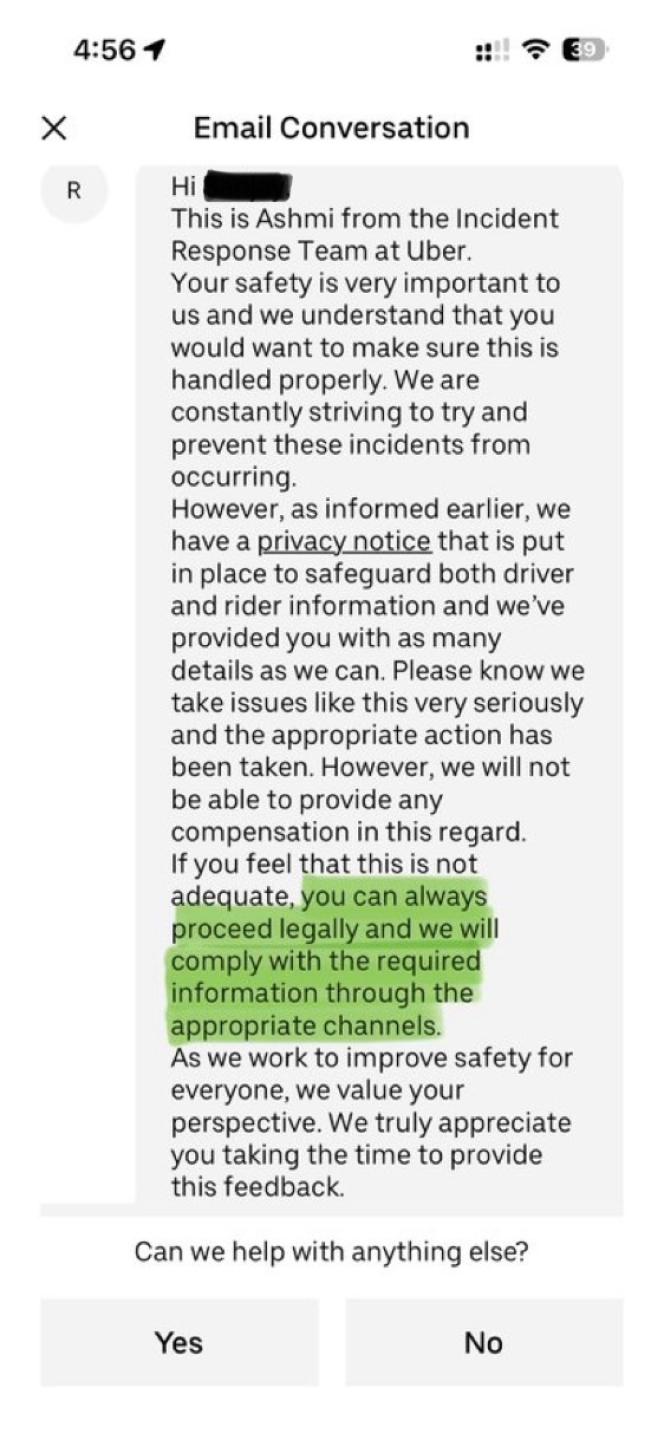
Beyond the refund, Uber informed us that "appropriate action" had been taken. When we asked for specific details, they cited privacy obligations and declined to provide any meaningful information. We were further informed that no compensation would be offered and that if we wished to pursue the matter further, we were free to take legal action, at which point the relevant information would be shared through the appropriate legal process.
Uber's support team appeared to believe that the refund resolved the matter, rather than merely correcting a billing anomaly. That left us wondering whether its customer support teams are adequately trained to distinguish between resolving a fare dispute and responding to a passenger safety emergency.
Accountability matters
What stood out during our conversation with Ashmi from Uber's support team was how quickly the discussion shifted to the driver and his responsibility for the condition of the vehicle. There was little acknowledgement of Uber's own responsibility in managing the incident or supporting its passengers in an emergency situation.
Passengers book through Uber. They pay Uber. The invoice is issued by Uber. When a serious safety incident occurs during a trip, it is reasonable to expect the platform to take ownership of the customer experience that follows. Why have a Help section in the app if it's the driver's fault?
A meaningful response could have included confirmation that the vehicle had been taken off the road, inspected, subjected to a safety audit or that corrective measures had been implemented. None of those require the disclosure of confidential information.
Instead, we were asked to accept a generic assurance that "appropriate action" had been taken. For an incident involving an apparent brake failure on an expressway, that simply wasn't enough.
Why this matters
Safety is measured not only by preventing accidents, but also by how an organisation responds when one is narrowly avoided.
Every day, parents book rides for children travelling alone. Families arrange transport for elderly relatives. Women depend on ride-hailing platforms during late hours. Working professionals spend countless hours each week inside these vehicles. Most of us never think twice before confirming a booking because we trust that the basics have already been taken care of. That confidence should never be taken for granted.
Accountability is non-negotiable
Safety incidents deserve more than scripted responses and ticket closures. They deserve urgency, transparency and meaningful follow-up. For a service that millions rely upon every day, companies like Uber must demonstrate that passenger safety remains their highest priority.
If Uber chooses to explain the investigation it conducted, the steps it took to assess the vehicle, or the measures implemented to prevent a recurrence, we will publish that response in full.
Until then, one question remains: When passengers place their trust in a platform, what should they reasonably expect when that trust is tested?
In our case, the answer was a refund of INR 182.67 and an invitation to pursue legal remedies if we wanted to know more. For a brand that built its reputation on trust, convenience and safety, that answer simply isn't good enough. Sometimes, all it takes is a single journey to destroy what took years to build.
Leave a Comment
0 Comments
No comments yet — be the first!