India is asking more of mobility. Can Green SM deliver?
India's mobility market is growing up. Commuters are demanding more than just the cheapest fare. Green SM's launch tests whether premium, reliable EV ride-hailing can finally scale.

Indian urban mobility has spent a decade teaching riders that the cheapest ride is rarely the best one. The next chapter — quietly and expensively — may finally begin to reward the difference.
There’s a particular feeling familiar to anyone who has hailed a cab in an Indian metro over the last decade. The driver threatens to cancel unless you pay cash. He has accepted the ride but isn't moving, waiting for you to add a tip before deciding whether to show up. If he arrives, he's glued to a phone call. The car looks clean at first glance, but hygiene is another matter. The AC doesn't work. The fare feels suspiciously high for the set of wheels you booked. Yet you're relieved he arrived at all. The ride happens, but it never quite feels like it should.
It is a small disappointment, repeated often enough to become invisible. And it is also, slowly, becoming unacceptable.
Indian consumers have spent the last ten years being trained — by Swiggy, by Blinkit, by Amazon — to expect that a digital service should simply work. Mobility, for various reasons, has lagged behind. But the gap between what other apps deliver and what the average ride-hailing app delivers has now grown too wide to ignore. And in 2026, that gap is finally beginning to close.
The rising bar
Deloitte’s Global Consumer Tracker has been measuring it. KPMG’s 2025 Customer Experience Report confirms it. NITI Aayog’s projection of a 23.5-million-strong gig workforce by 2030 frames the scale. The story they tell, collectively, is the same: India’s urban consumer is no longer choosing on price alone. They are choosing on quality, on reliability, on the small dignity of a service that does what it says. For ride-hailing, that means clean vehicles. Drivers who arrive on time and don’t negotiate about destination. Fares that don’t shape-shift between booking and drop-off. A green badge that means more than a sticker on the rear window. And — perhaps the most quietly subversive shift of all — a willingness to pay slightly more for any of it.
The cautionary chapter
To understand where the market is going, it helps to look at where it has been. BluSmart, until April 2025, was one of the most compelling stories in Indian mobility. An all-electric fleet of over 7,000 cars across Delhi-NCR, Bengaluru and Mumbai. Clean cabs. Polite drivers. Real-time tracking that worked. Service standards that genuinely felt like an upgrade on what came before. For a stretch of years, it was the closest India had come to making green ride-hailing both desirable and ordinary. Then service standards began to slip. Cancellations became par for the course. Driver and vehicle quality were noticeably deteriorating. Finally, SEBI flagged irregularities. The fleet froze. The app went dark. Over 10,000 drivers were left without notice or income. Customer wallet refunds disappeared.
The lesson was not about EVs. The vehicles were fine. The lesson was about everything else — the governance underneath the green paint, the corporate plumbing that decides whether a beautiful idea actually survives contact with reality. India’s mobility customers learned something expensive: that ‘sustainable’ on the app and ‘sustainable’ on the balance sheet are two different things, and that the second is what eventually decides whether the first is real.
The quiet counter-example
While BluSmart’s story dominated the headlines, a smaller, quieter operator continued to do something interesting in Bangalore and Delhi. Shoffr, founded in 2022, didn’t try to be everywhere. It picked one segment — the premium airport transfer — and built around it. BYD e6 electric SUVs. Drivers trained in soft skills, never on the phone, incentivised for courtesy. Water bottles, tissues, occasionally toffees, in a small organiser on the centre console. Human customer support, not bots. Pet-friendly, almost as a quiet brag. Priced at roughly Uber Premium levels, but with a consistency that Uber Premium has, frankly, struggled to deliver.
It is a small business by tech-startup standards — a modest fleet, mostly corporate clients, bootstrapped, reportedly profitable. But it is also one of the few green mobility models in India that genuinely works on its own merits, without rounds of venture funding masking the unit economics. Customers don’t tweet about how it changed the world. They tweet about how the driver was on time and the car was clean. Which, in Indian ride-hailing, turns out to be a higher bar than it sounds.
The Shoffr model tells you something useful: that the premium green ride is not a market segment waiting to be invented. It is already here. It is just not yet at scale.
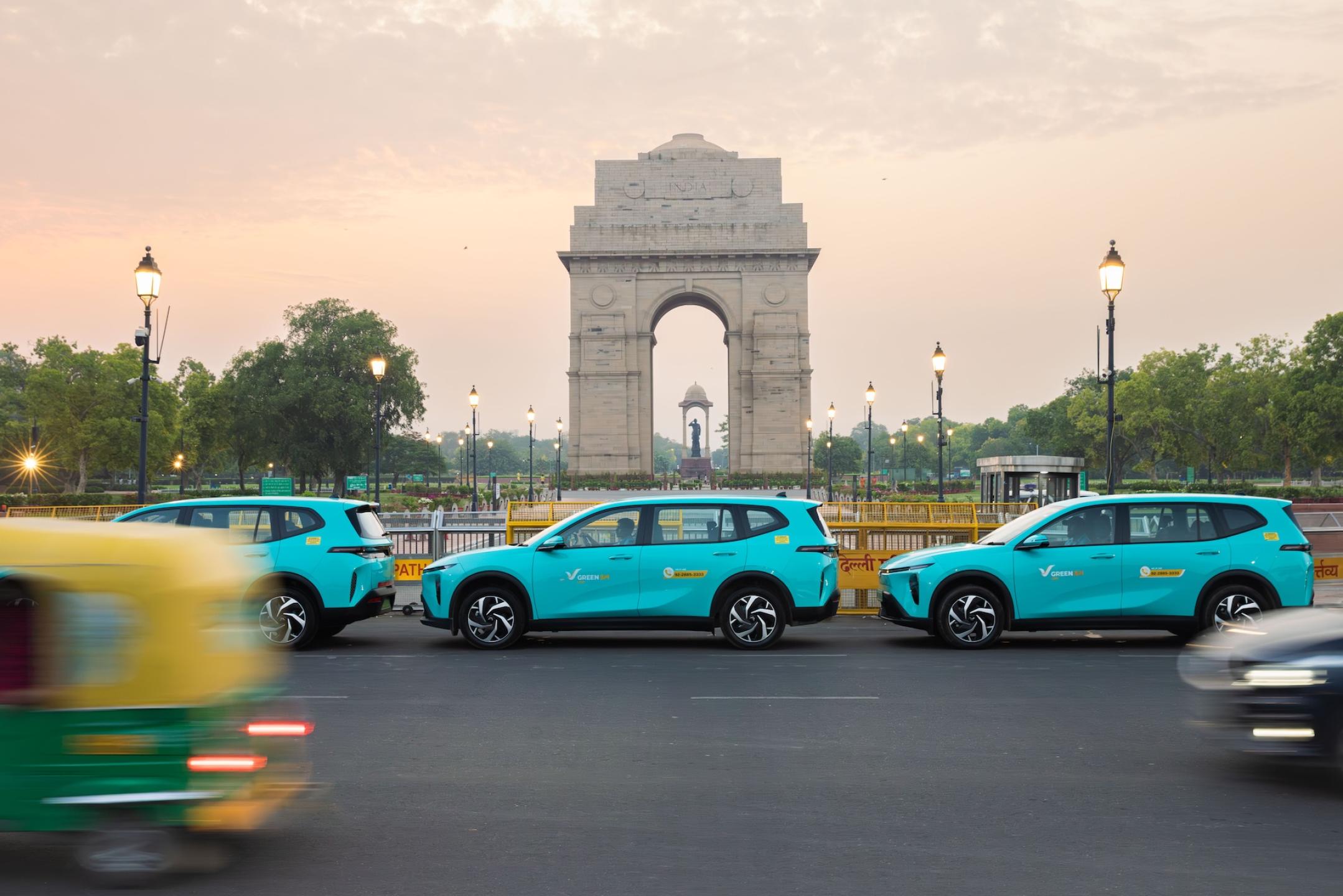
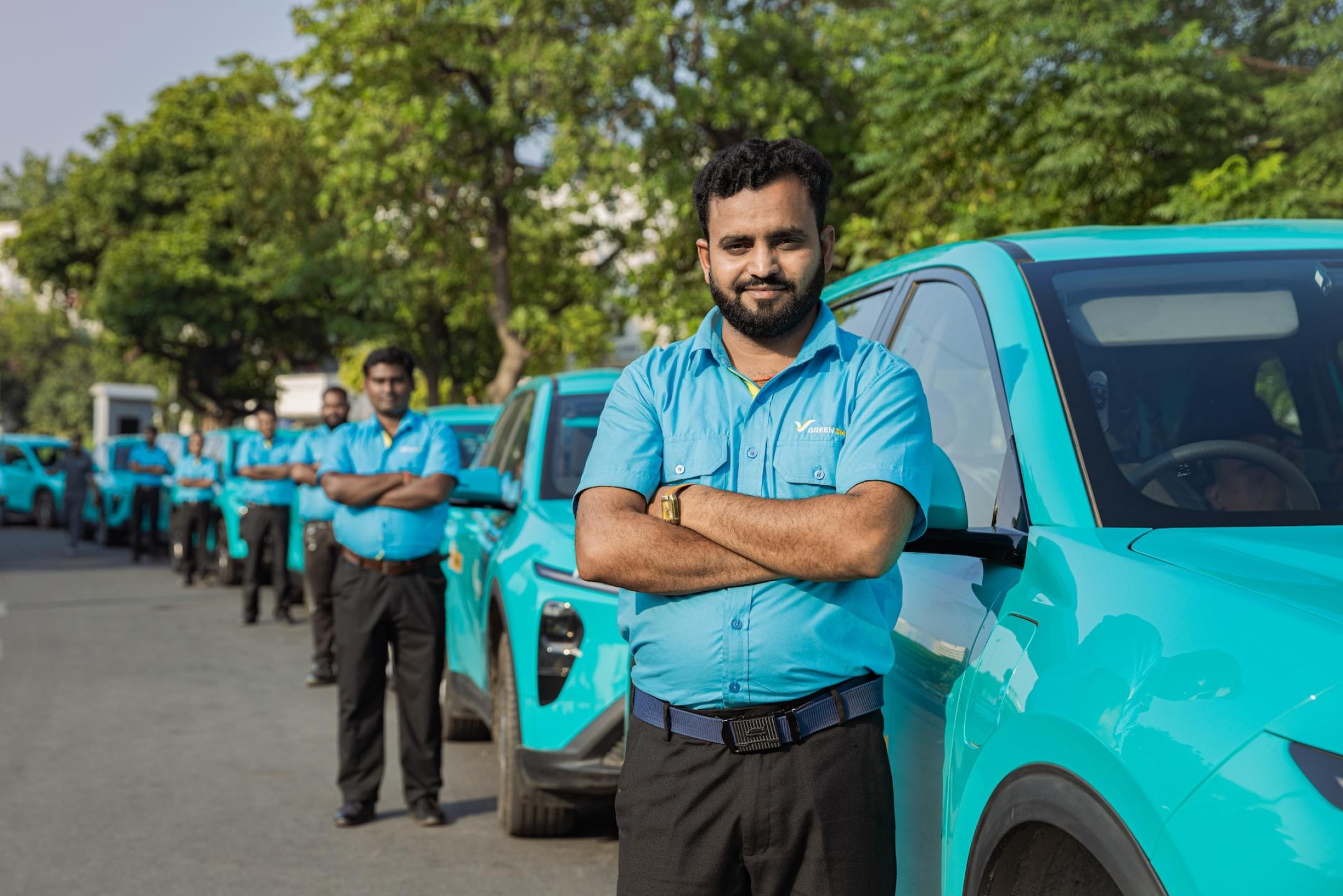
Enter Green SM
Into this market, ahead of an official launch, arrives Green SM — an electric ride-hailing brand from Southeast Asia, already operational across multiple markets in the region. New Delhi and Gurugram first. A fleet of modern Vinfast EVs, drivers selected and trained as employees rather than freelance gig workers, technology-enabled operations, and a service framework battle-tested across half a dozen Asian cities.
It is, on paper, the sort of arrival India’s green mobility space has been waiting for. A scaled operator with a fleet-and-employee model rather than an aggregator one. Drivers with predictable wages rather than algorithmic earnings. The promise of consistency that BluSmart almost delivered, that Shoffr delivers in miniature, and that nobody in India has yet delivered at metropolitan scale.
Whether Green SM lives up to that promise will be the question of the next twelve months. The history of mobility in India is littered with foreign entrants who arrived with global playbooks and departed with local lessons. But the underlying premise — that the Indian customer is ready to pay a small premium for a green ride that is honest, safe and dignified — is no longer up for debate.
What India is actually asking for
What this country needs from green mobility, in 2026, is a benchmark. A name a customer can recommend without caveats. A service a driver can build a career around without anxiety. A green claim that is verifiable, not just visible. And, crucially, a value proposition that justifies the premium without making it ridiculous.
‘Value for money’, in the Indian luxury vocabulary, has begun to mean something more interesting than it used to. Not cheap. Commensurate. A ride that costs slightly more, but actually arrives. A car that is actually clean. A driver who is actually a professional. A platform whose books are actually in order.
India’s next chapter of urban mobility will not be won by the loudest brand or the lowest fare. It will be won by the operator that takes the small dignities seriously — and proves, on a Tuesday morning at 7 am in Gurugram traffic, that a quiet, well-run, electric ride is no longer a luxury. Just a reasonable expectation.
Leave a Comment
0 Comments
No comments yet — be the first!