Reviews
A peek into a billion-dollar sport

Book Review: “Fast Money” by Caroline Reid and Christian Sylt. An insider’s account of how Formula One became sport’s greatest money machine. Published in Hindu BusinessLine, Sunday, 17 Aug 2025. To read the article on The Hindu BusinessLine website, click here.
When Giuseppe Farina won the first-ever Formula One championship race at Silverstone in 1950, the prize money was around £500. Today, Max Verstappen pockets roughly £50,000 during a single 90-second lap. That’s just a micro glimpse of the scale behind Formula One’s staggering economic transformation from a hobbyist pursuit of the elite, into one of the world’s richest sports, over its 75-year chequered journey.
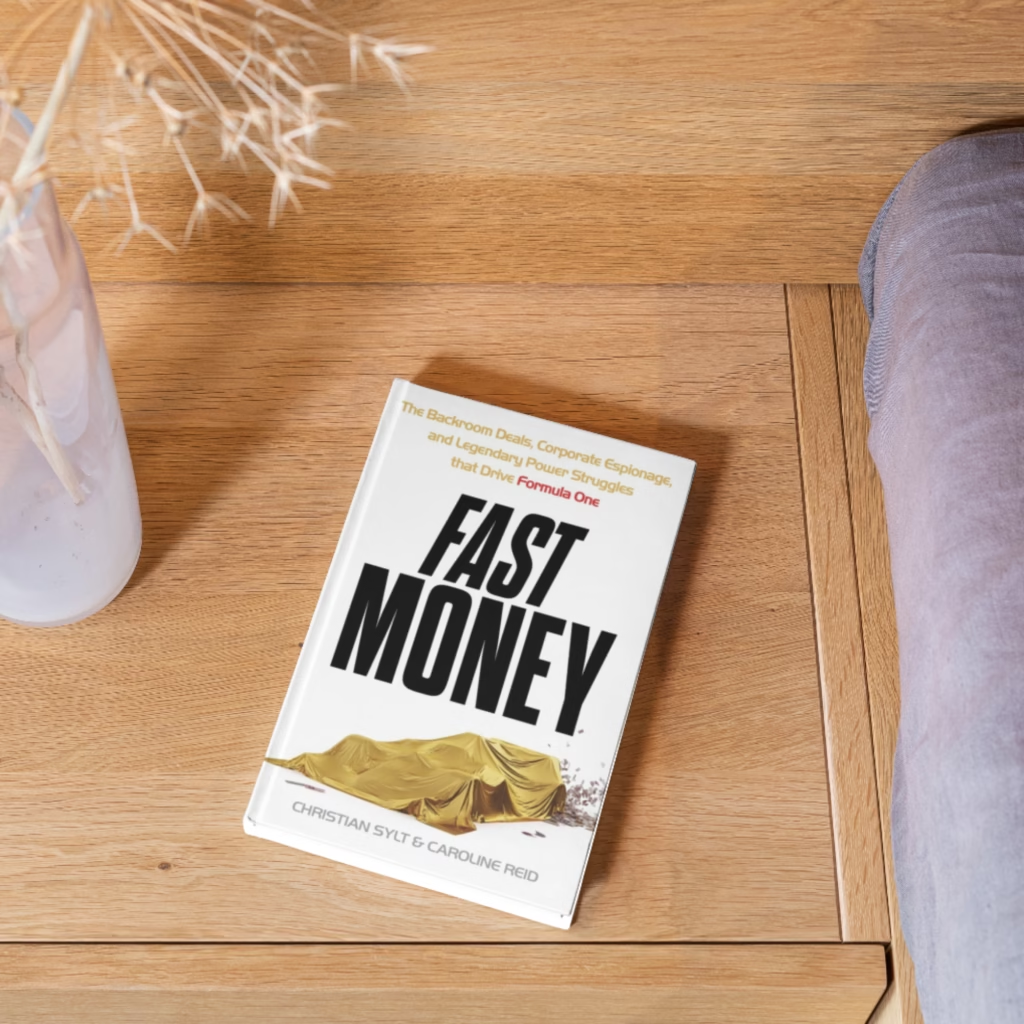
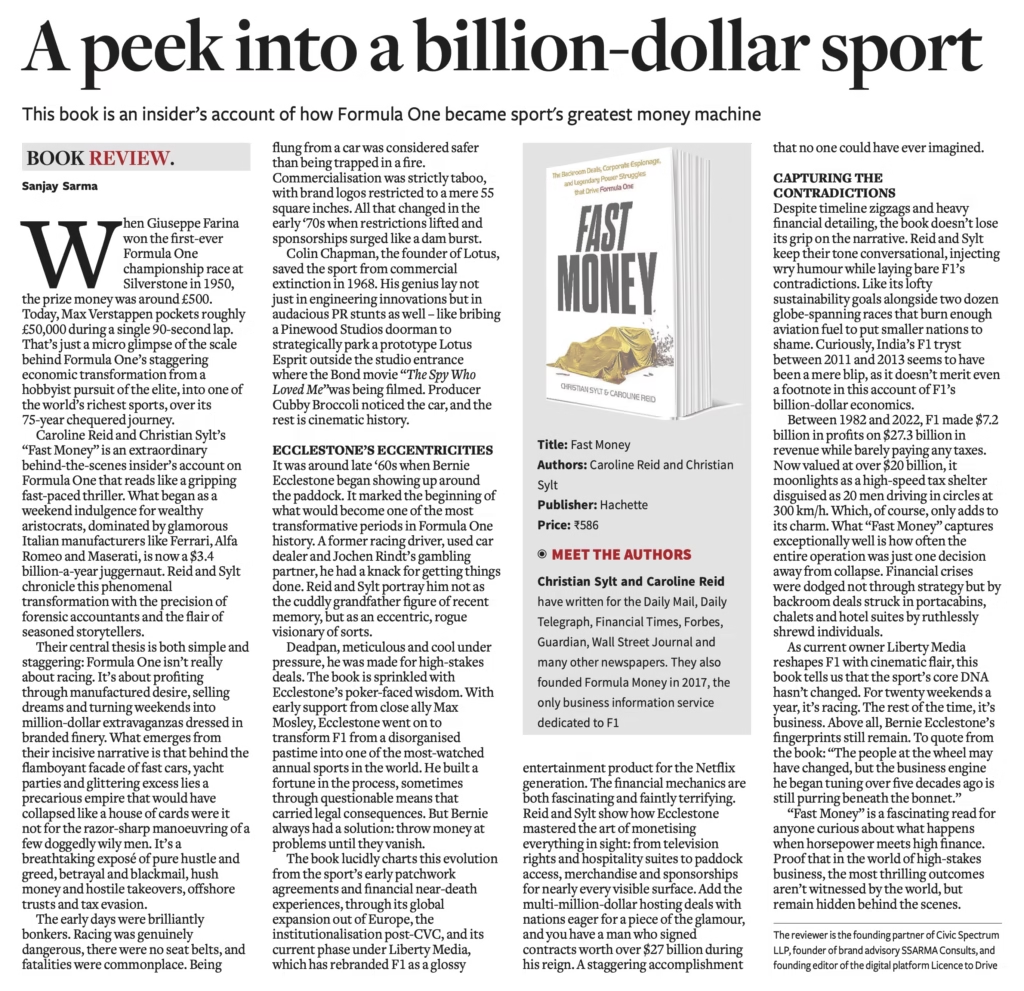
Caroline Reid and Christian Sylt’s “Fast Money” is an extraordinary behind-the-scenes insider’s account on Formula One that reads like a gripping fast-paced thriller. What began as a weekend indulgence for wealthy aristocrats, dominated by glamorous Italian manufacturers like Ferrari, Alfa Romeo and Maserati, is now a $3.4 billion-a-year juggernaut. Reid and Sylt chronicle this phenomenal transformation with the precision of forensic accountants and the flair of seasoned storytellers.
Their central thesis is both simple and staggering: Formula One isn’t really about racing. It’s about profiting through manufactured desire, selling dreams and turning weekends into million-dollar extravaganzas dressed in branded finery. What emerges from their incisive narrative is that behind the flamboyant facade of fast cars, yacht parties and glittering excess lies a precarious empire that would have collapsed like a house of cards were it not for the razor-sharp manoeuvring of a few doggedly wily men. It’s a breathtaking exposé of pure hustle and greed, betrayal and blackmail, hush money and hostile takeovers, offshore trusts and tax evasion.
The early days were brilliantly bonkers. Racing was genuinely dangerous, there were no seat belts, and fatalities were commonplace. Being flung from a car was considered safer than being trapped in a fire. Commercialisation was strictly taboo, with brand logos restricted to a mere 55 square inches. All that changed in the early ‘70s when restrictions lifted and sponsorships surged like a dam burst.
Colin Chapman, the founder of Lotus, saved the sport from commercial extinction in 1968. His genius lay not just in engineering innovations but in audacious PR stunts as well – like bribing a Pinewood Studios doorman to strategically park a prototype Lotus Esprit outside the studio entrance where the Bond movie “The Spy Who Loved Me” was being filmed. Producer Cubby Broccoli noticed the car, and the rest is cinematic history.
Ecclestone’s eccentricities
It was around late ‘60s when Bernie Ecclestone began showing up around the paddock. It marked the beginning of what would become one of the most transformative periods in Formula One history. A former racing driver, used car dealer and Jochen Rindt’s gambling partner, he had a knack for getting things done. Reid and Sylt portray him not as the cuddly grandfather figure of recent memory, but as an eccentric, rogue visionary of sorts. Deadpan, meticulous and cool under pressure, he was made for high-stakes deals. The book is sprinkled with Ecclestone’s poker-faced wisdom. With early support from close ally Max Mosley, Ecclestone went on to transform F1 from a disorganised pastime into one of the most-watched annual sports in the world. He built a fortune in the process, sometimes through questionable means that carried legal consequences. But Bernie always had a solution: throw money at problems until they vanish.
The book lucidly charts this evolution from the sport’s early patchwork agreements and financial near-death experiences, through its global expansion out of Europe, the institutionalisation post-CVC, and its current phase under Liberty Media, which has rebranded F1 as a glossy entertainment product for the Netflix generation.
The financial mechanics are both fascinating and faintly terrifying. Reid and Sylt show how Ecclestone mastered the art of monetising everything in sight: from television rights and hospitality suites to paddock access, merchandise and sponsorships for nearly every visible surface. Add the multi-million-dollar hosting deals with nations eager for a piece of the glamour, and you have a man who signed contracts worth over $27 billion during his reign. A staggering accomplishment that no one could have ever imagined.
Capturing the Contradictions
Despite timeline zigzags and heavy financial detailing, the book doesn’t lose its grip on the narrative. Reid and Sylt keep their tone conversational, injecting wry humour while laying bare F1’s contradictions. Like its lofty sustainability goals alongside two dozen globe-spanning races that burn enough aviation fuel to put smaller nations to shame. Curiously, India’s F1 tryst between 2011 and 2013 seems to have been a mere blip, as it doesn’t merit even a footnote in this account of F1’s billion-dollar economics.
Between 1982 and 2022, F1 made $7.2 billion in profits on $27.3 billion in revenue while barely paying any taxes. Now valued at over $20 billion, it moonlights as a high-speed tax shelter disguised as 20 men driving in circles at 300 km/h. Which, of course, only adds to its charm.
What “Fast Money” captures exceptionally well is how often the entire operation was just one decision away from collapse. Financial crises were dodged not through strategy but by backroom deals struck in portacabins, chalets and hotel suites by ruthlessly shrewd individuals.
As current owner Liberty Media reshapes F1 with cinematic flair, this book tells us that the sport’s core DNA hasn’t changed. For twenty weekends a year, it’s racing. The rest of the time, it’s business. Above all, Bernie Ecclestone’s fingerprints still remain. To quote from the book: “The people at the wheel may have changed, but the business engine he began tuning over five decades ago is still purring beneath the bonnet.”
“Fast Money” is a fascinating read for anyone curious about what happens when horsepower meets high finance. Proof that in the world of high-stakes business, the most thrilling outcomes aren’t witnessed by the world, but remain hidden behind the scenes.
